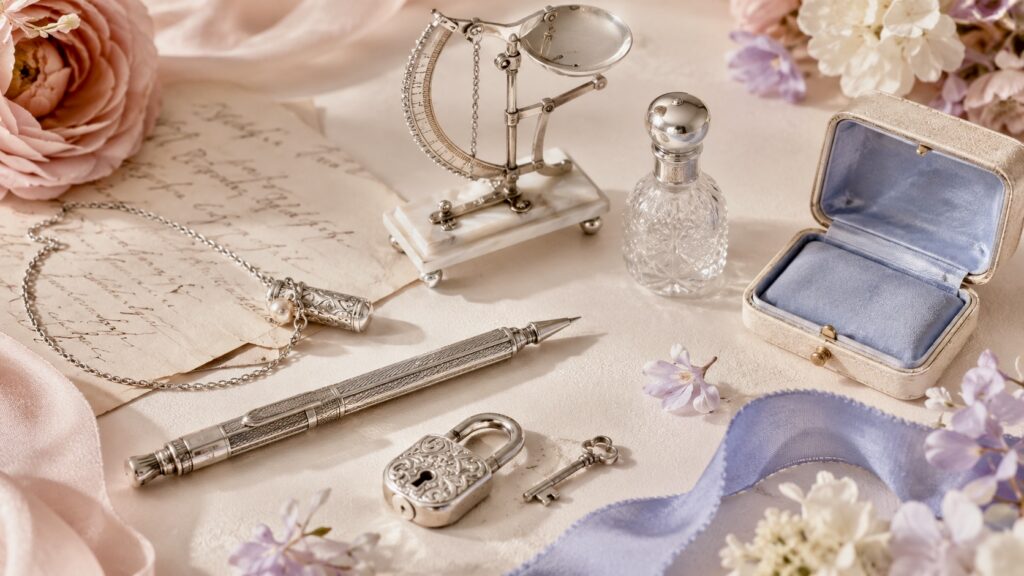
Sampson Mordan is best remembered for propelling pencils, but the historic story is much wider than one object. The Mordan name belongs to a London world of invention, locks, writing pieces, security, weighing, silver, personal objects and finely made things for the desk, the hand and the pocket.
The modern Sampson Mordan & Co.® chapter is jewellery and silver led, but that does not require the history to be rewritten. The product changed. The trade language endured.
From Bramah to Mordan
To understand Sampson Mordan, it helps to begin with Joseph Bramah. Bramah’s world was one of locks, patents, precision and practical invention. Mordan’s early association with that world matters because it explains much of what followed.
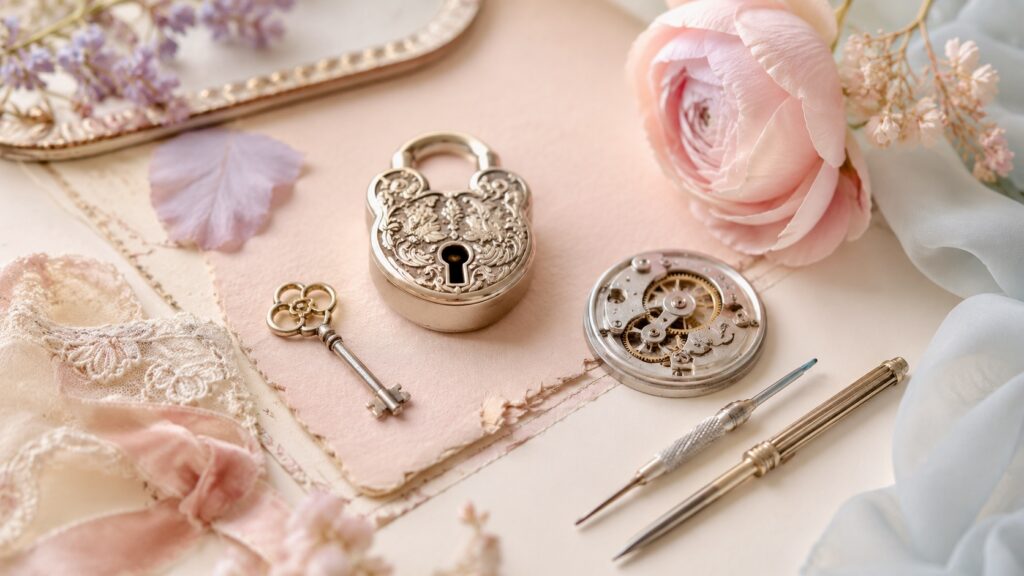
The historic Mordan business was not simply decorative. It was concerned with useful things made well: objects for papers, privacy, writing, carrying, securing, gifting and daily life. That is why locks, writing instruments, letter balances, silver cases and personal objects can sit together in the same story.
The Pencil That Made the Name Known
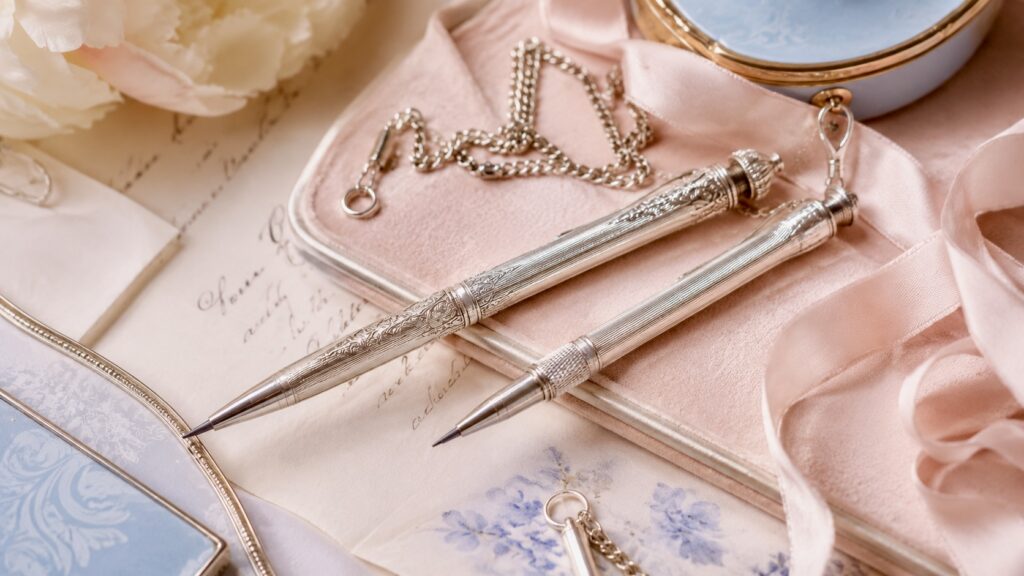
The propelling pencil made Sampson Mordan famous. The early nineteenth-century pencil was not just a writing tool; it was a precise, portable, personal object. It belonged to the hand and the pocket. It could be made in silver or gold, carried on a chain, kept on a desk, given as a gift and treasured long after ordinary writing instruments had disappeared.
Writing pieces enlarged the Mordan business and, in time, may have preoccupied it. Pencils, portable pens, penholders and pencil cases became central to the surviving Mordan identity. Yet they were part of a broader culture of precision manufacture, not a separate story.
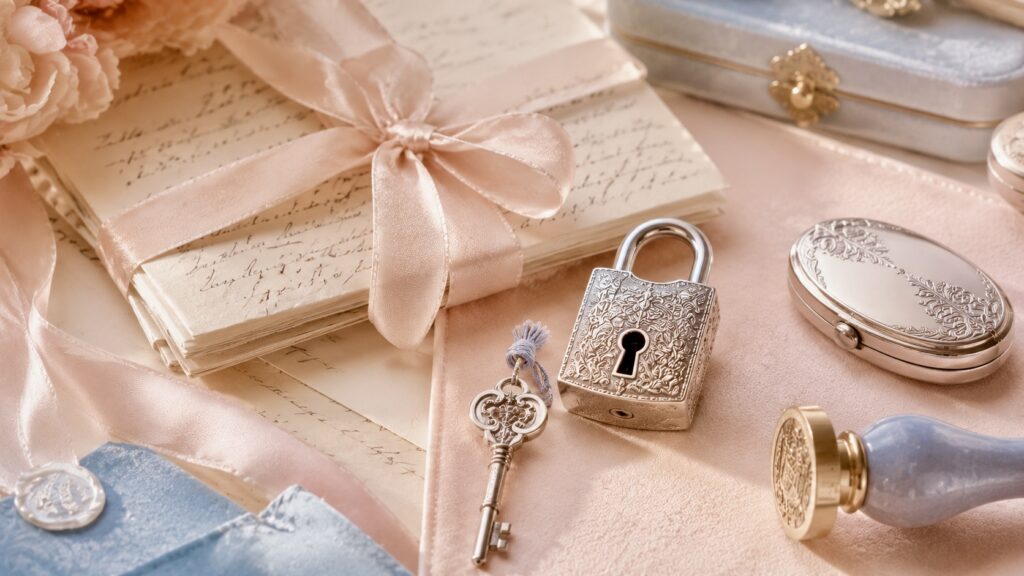
Locks, Security and Private Papers
One of the most important missing parts of the Mordan story is security. The historic business was associated with patent locks, secure fittings, deed boxes, cash boxes and the protection of private papers. This connects directly back to the Bramah world of locks and invention.
Seen this way, Mordan’s work was not only about writing. It was about the private life of documents: making them, carrying them, securing them, weighing them, filing them and keeping them close.
That matters for the modern brand because security is not merely a technical idea. In luxury terms, it is emotional. It is the clasp, the locket, the box, the seal, the safe place, the thing kept close.
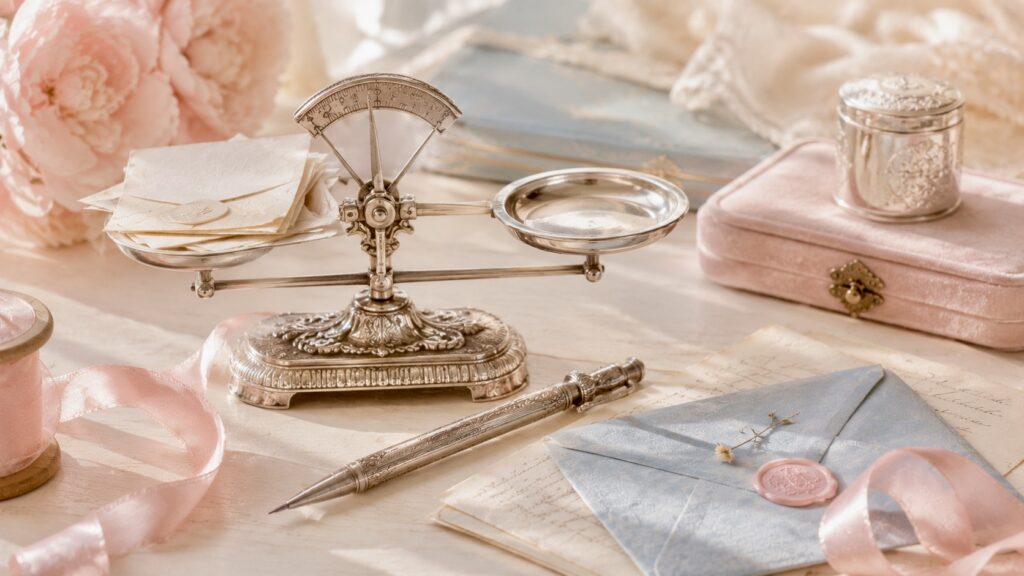
Letter Balances and Postage Scales
Postage scales can seem unexpected if Sampson Mordan is understood only as a pencil maker. They make much more sense when the business is seen through the world of correspondence.
Letter balances and postal scales belong to the same desk as pens, pencils, paper, seals, inkstands and private letters. They are practical objects, but they also have presence: brass, steel, wood, proportion, balance and the ritual of sending something out into the world.
They also remind us that the surviving silver record may not show the whole business. Precious metal objects were hallmarked, valued and preserved. Brass, steel, wood and working objects were more likely to be used hard, altered, separated or lost.
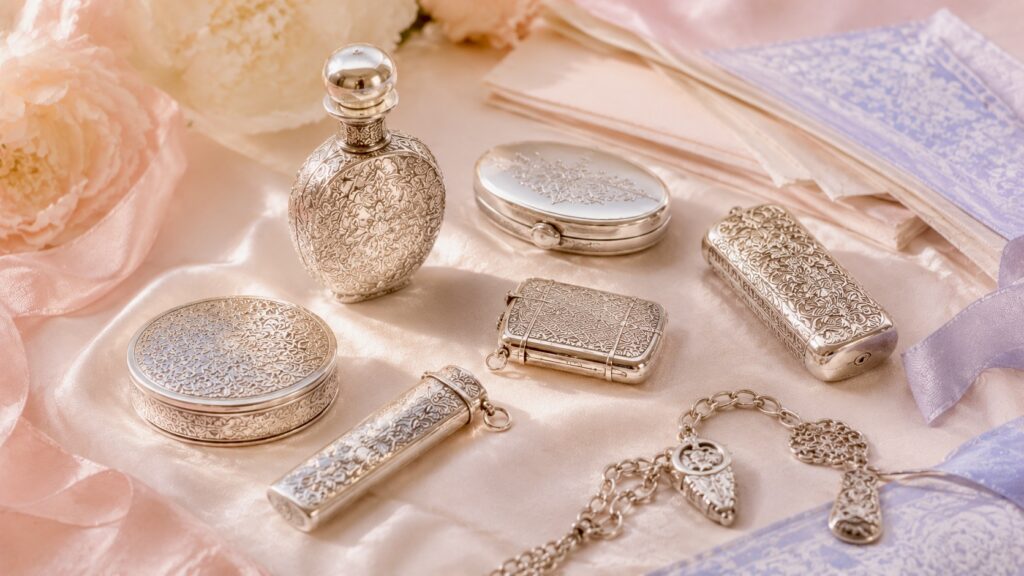
Silver, Smallwork and Personal Objects
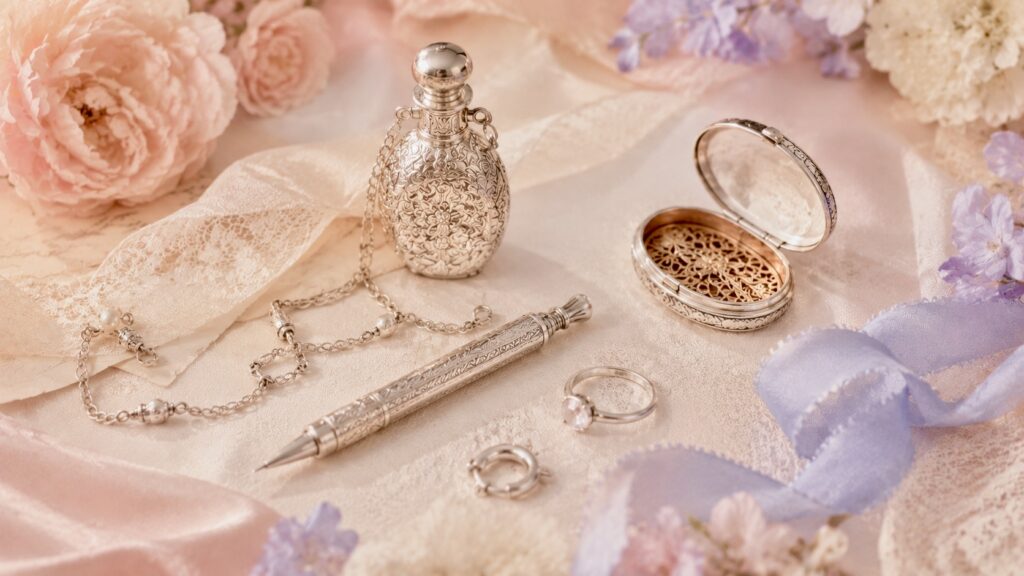
Silver is the most visible surviving thread in the Sampson Mordan story. Silver pencils, scent bottles, vinaigrettes, cases, desk pieces, vesta cases, whistles and personal objects survive because they were precious, marked, repaired, collected and valued.
These pieces belong naturally to the overlapping trades of silversmiths, smallworkers, jewellers and precision makers. They were often small in scale but serious in workmanship. They were made for touch, use, carrying and keeping.
This is where Mordan becomes especially relevant today. The nineteenth-century demand for propelling pencils, vesta cases and chatelaine chains has changed. The underlying desire has not. People still choose precious metal objects for the hand, the pocket, the body, the desk and the private rituals of life.
Trade Manufacture and London Retail
The historic Mordan business also appears to have worked within the wider London trade. Some objects were sold directly, while others moved through stationers, retailers and trade channels. This is a natural part of nineteenth-century London manufacture.
For that reason, not every surviving object tells the whole story at first glance. A piece may carry a maker’s mark, a retailer’s name, a hallmark, a patent stamp or a later attribution. Each object needs to be read carefully.
For the modern Sampson Mordan & Co.® archive, this matters. It means the brand should not rely only on auction language. It should build its own evidence-led record: marks, photographs, materials, trade references, adverts, catalogues and object notes.
Did Sampson Mordan Make Jewellery?
The safest answer is careful. The historic firm should not be described as a modern jewellery house in the way that phrase would be understood today. But the work did sit close to jewellers’ and silversmiths’ trades.
Many Mordan objects were precious, personal and body-adjacent. Pencils could be chain-worn. Vinaigrettes and scent pieces belonged to personal dress and carrying. Gold writing pieces and silver cases crossed the boundary between utility and adornment. Chatelaine pieces, seals, chains, cases and dress-related objects all speak the language of jewellery even when they were not jewellery in the narrow modern sense.
That is the important distinction. The historic product line should be described accurately. The modern design language can still grow from it.
From Historic Objects to Fine Jewellery Today
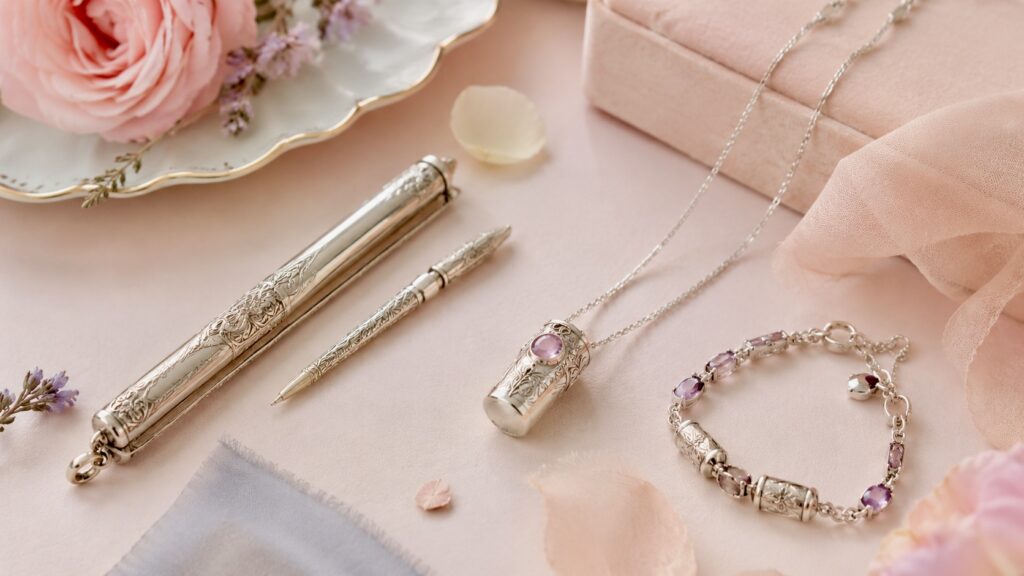
The present-day Sampson Mordan & Co.® is a modern jewellery and silver chapter. It does not need to claim that the historic company made fine jewellery in 2026 terms. Instead, it can translate the historic trade language into forms that are commercially alive today.
A propelling pencil can become a pendant form, a pocket piece or a collector’s silver object. A vesta case can inform a locket, case, box or precious container. A chatelaine chain can inform bracelet, necklace and charm architecture. A lock can become a clasp. A seal can become a signet ring, pendant or engraved object. A letter balance can inspire desk silver and objects of proportion.
This is not rewriting history. It is understanding the history properly.
The Wartime End of the Historic Firm
The historic S. Mordan & Co. business ended in the twentieth century. Its factory was destroyed during wartime bombing, and the company later entered voluntary liquidation. That ending should remain visible in the story.
It protects the modern brand from overstating continuity. It also gives the renewed chapter more dignity. Sampson Mordan & Co.® today is not pretending the nineteenth-century company never ended. It is building a modern jewellery and silver house from a historically literate understanding of what the name once represented.
So, What Did Sampson Mordan Make?
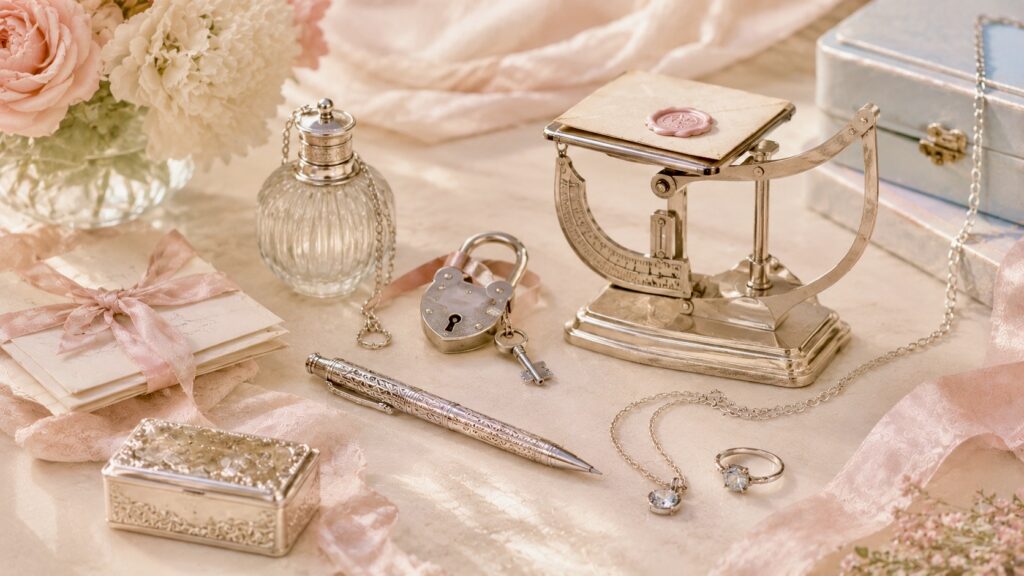
Sampson Mordan made, and was associated with, a broad world of useful, ingenious and often beautiful objects: propelling pencils, portable pens, penholders, locks, secure fittings, letter balances, postage scales, inkstands, scent bottles, vinaigrettes, vesta cases, cases, chains, personal silver and objects for the desk, hand, pocket and private life.
The pencil made the name known. Silver made much of the story survive. Bramah explains the culture of invention. Locks and balances explain the world of papers, privacy and trade. Jewellery and silver are the modern refinement of that enduring language.
The product changed. The trade language endured.
Frequently Asked Questions
Did Sampson Mordan only make pencils?
No. Propelling pencils are central to the Mordan story, but the historic business was also associated with locks, writing pieces, secure fittings, letter balances, postal scales, inkstands, scent bottles, vinaigrettes, personal silver and other small objects.
Was Sampson Mordan connected to Joseph Bramah?
Yes. Sampson Mordan is commonly recorded as having been associated with Joseph Bramah, the inventor and locksmith. This connection helps explain the later Mordan interest in locks, patents, precision and ingenious small objects.
Did Sampson Mordan make locks?
Yes, the historic business is associated with patent locks, secure fittings, deed boxes and related security objects. This part of the story should be understood alongside the better-known writing instruments.
Did Sampson Mordan make postage scales?
Letter balances and postage scales are associated with S. Mordan & Co. They belong naturally to the same world as pens, pencils, paper, correspondence, desks and London trade.
Did Sampson Mordan make silver?
Yes. Silver is one of the strongest surviving threads in the Mordan story. Silver writing pieces, personal objects, cases, scent pieces and other small silver goods are central to how the historic name is collected and understood today.
Did Sampson Mordan make jewellery?
The historic firm is better described as working in the overlapping worlds of silversmiths, smallworkers, jewellers and precision makers. It made precious, personal and chain-worn objects, but broad claims about a historic fine jewellery house should be made carefully.
Is the modern Sampson Mordan & Co.® the same company as the historic firm?
No public claim should be made that the modern Sampson Mordan & Co.® is the same legal company as the nineteenth-century business. The present-day house is a modern jewellery and silver chapter shaped by the historic trade language of invention, silver, precision and personal objects.
