
Antique Sampson Mordan Sterling Silver Hidden Photograph Vesta Case 1902
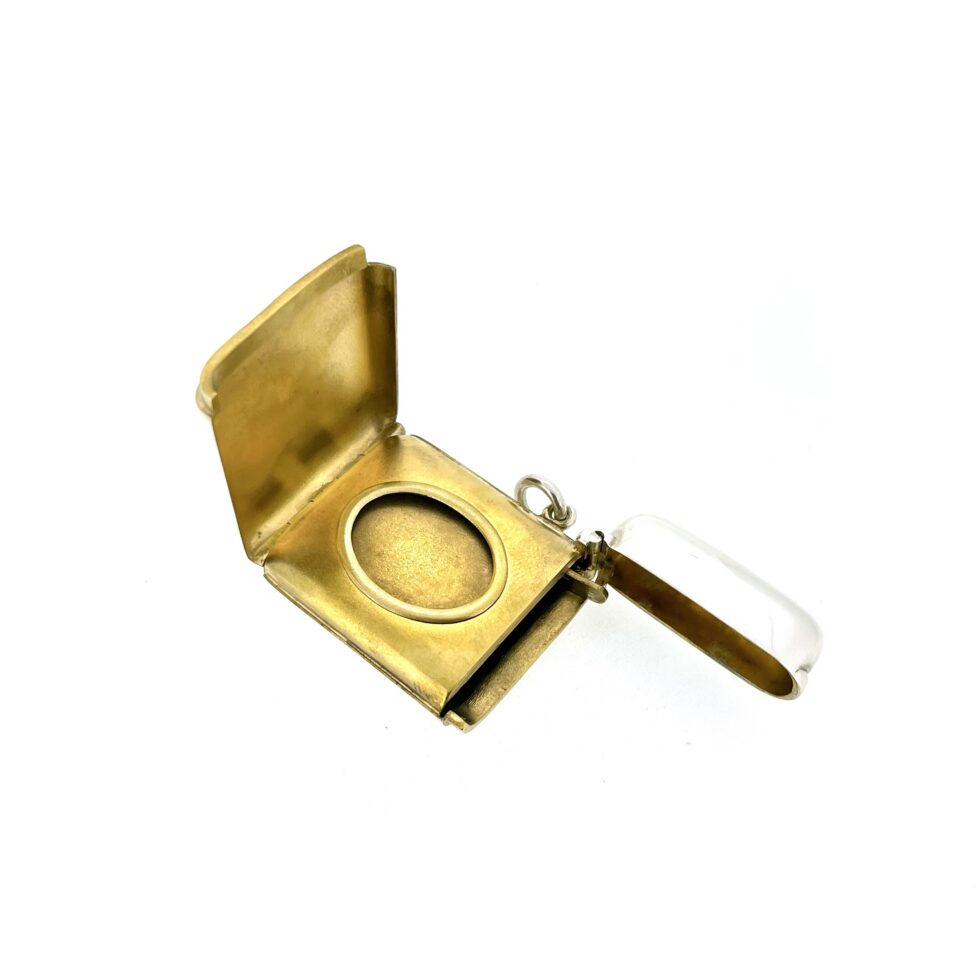
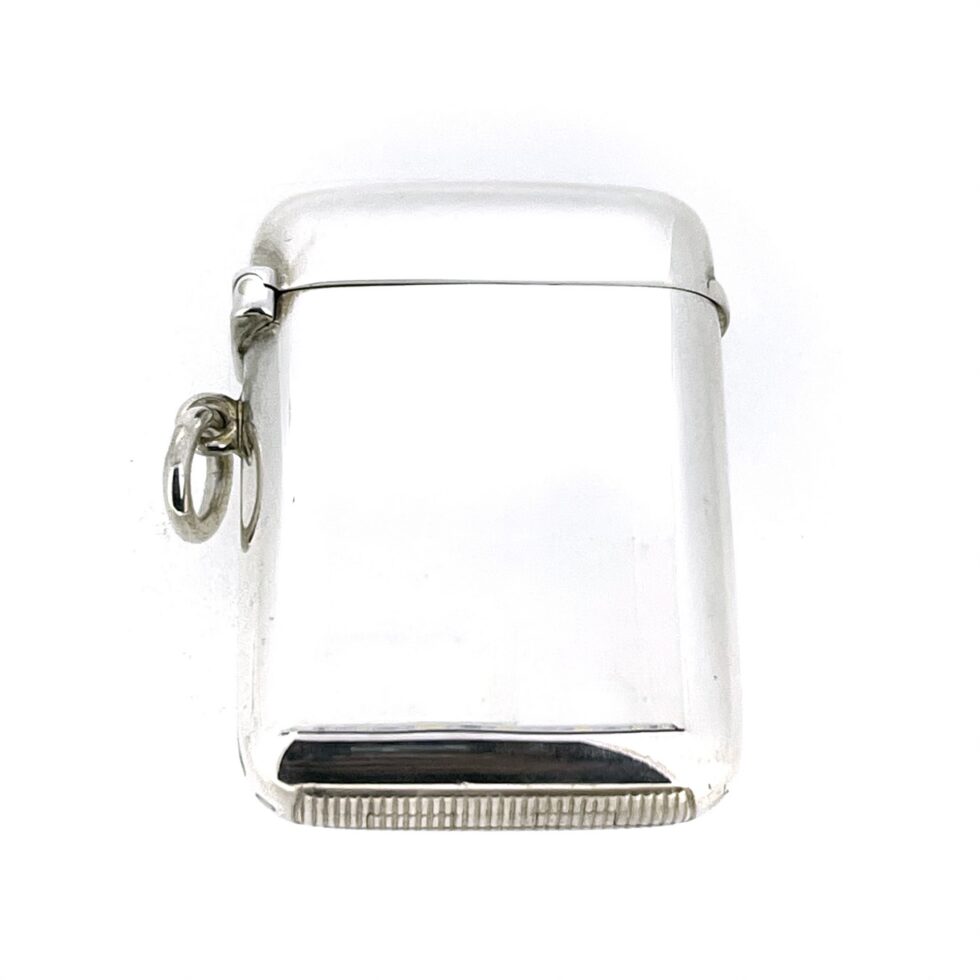
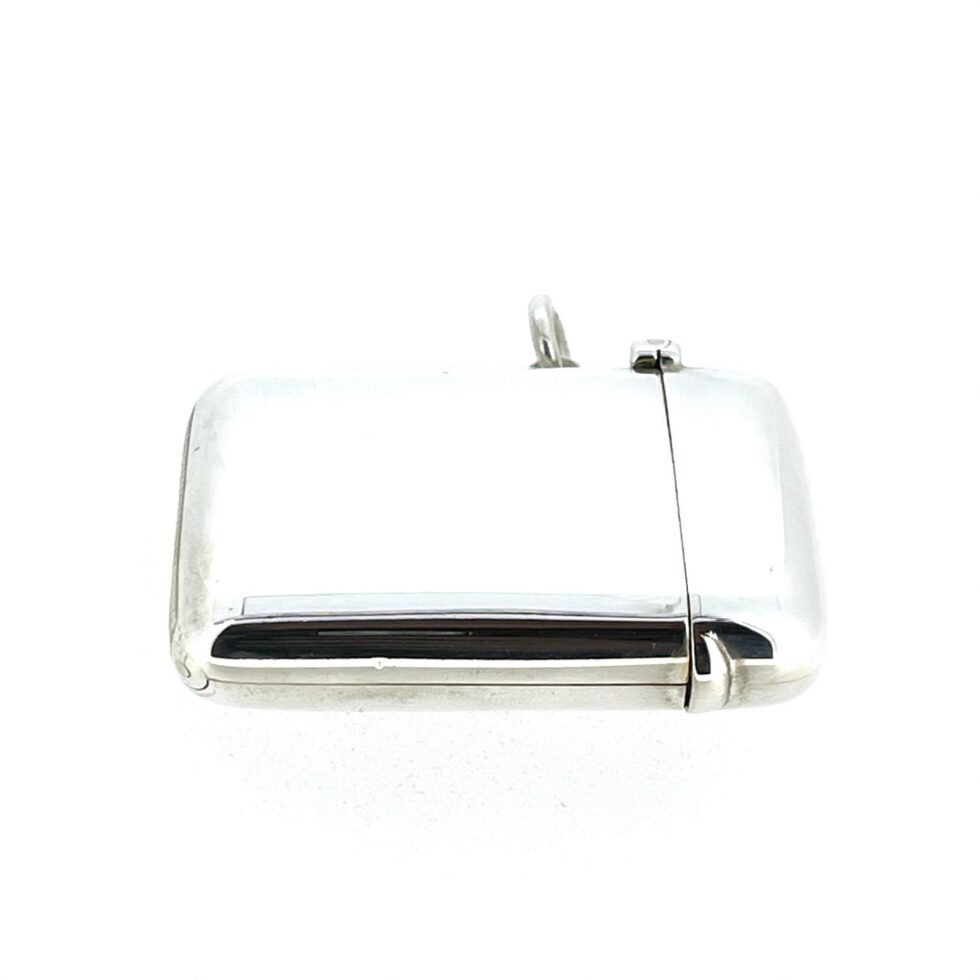
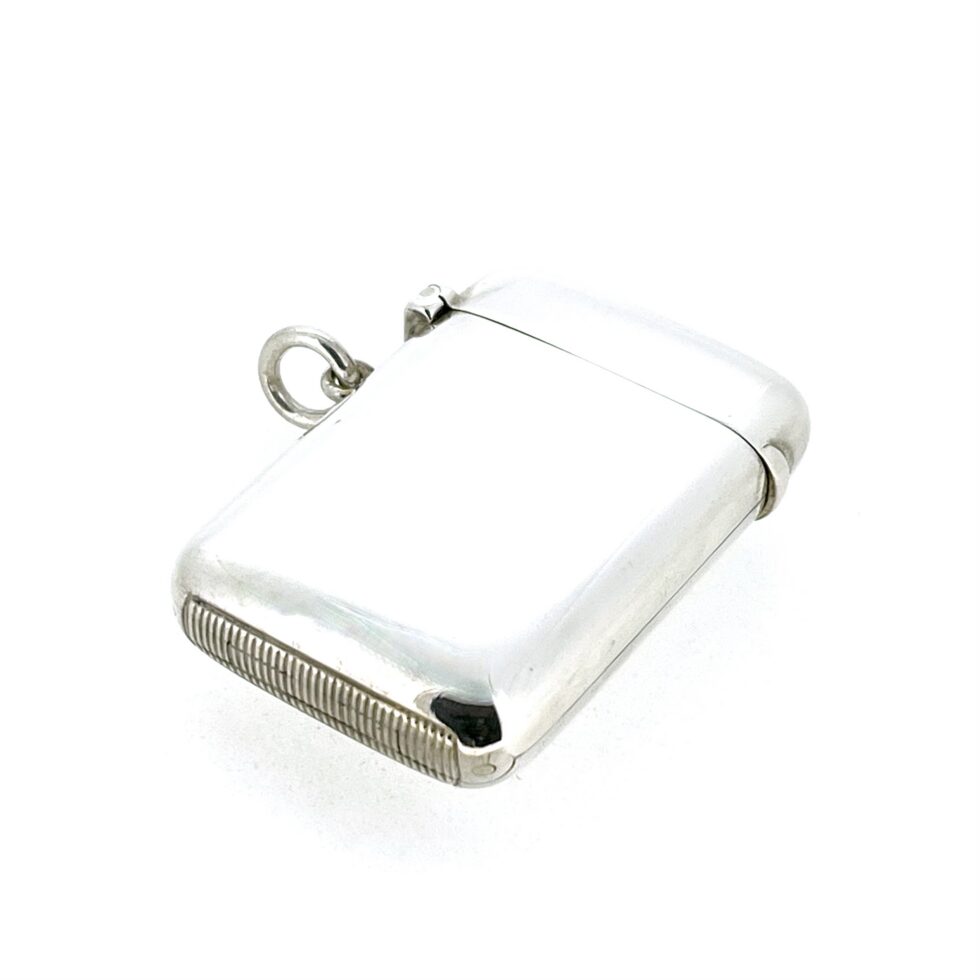
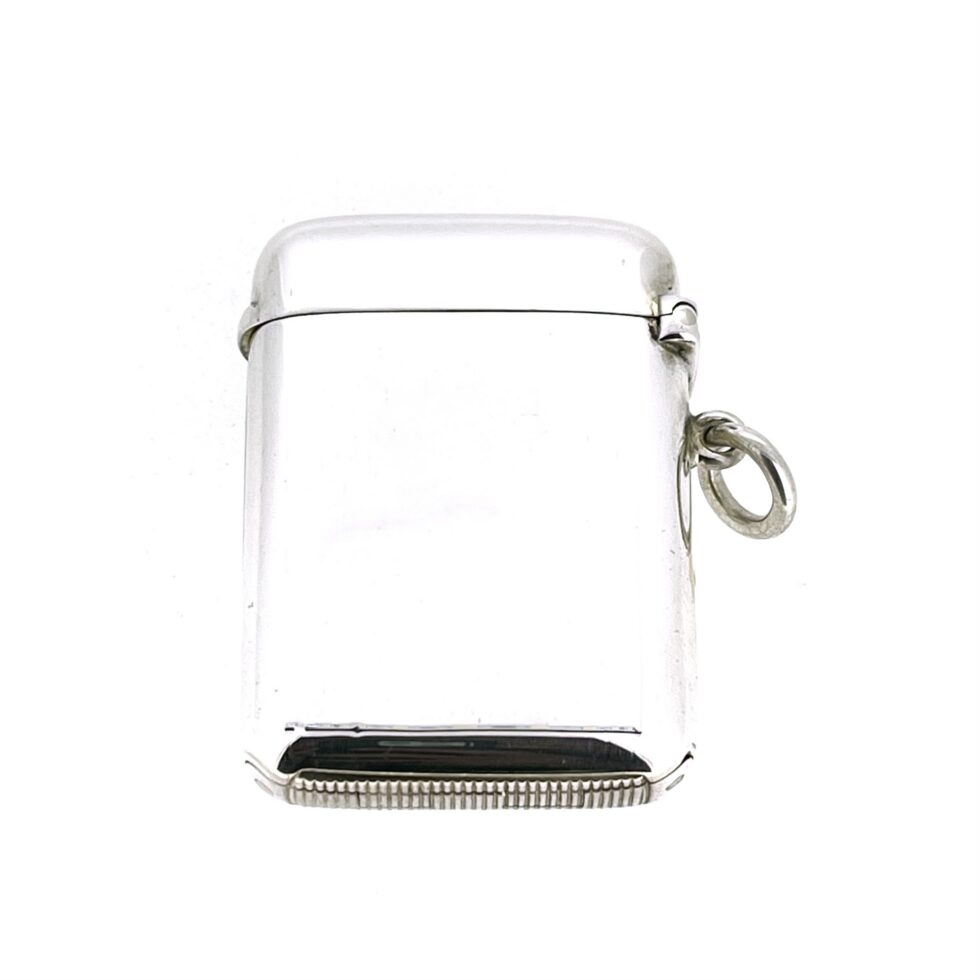
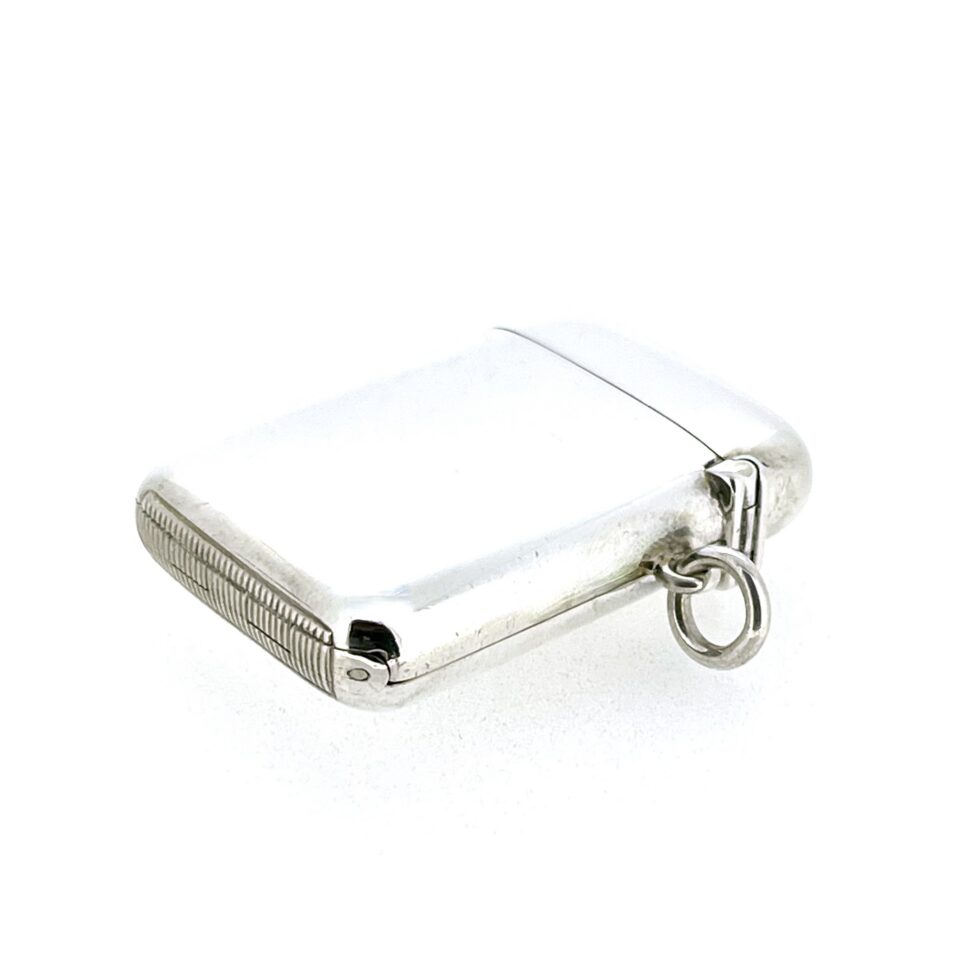
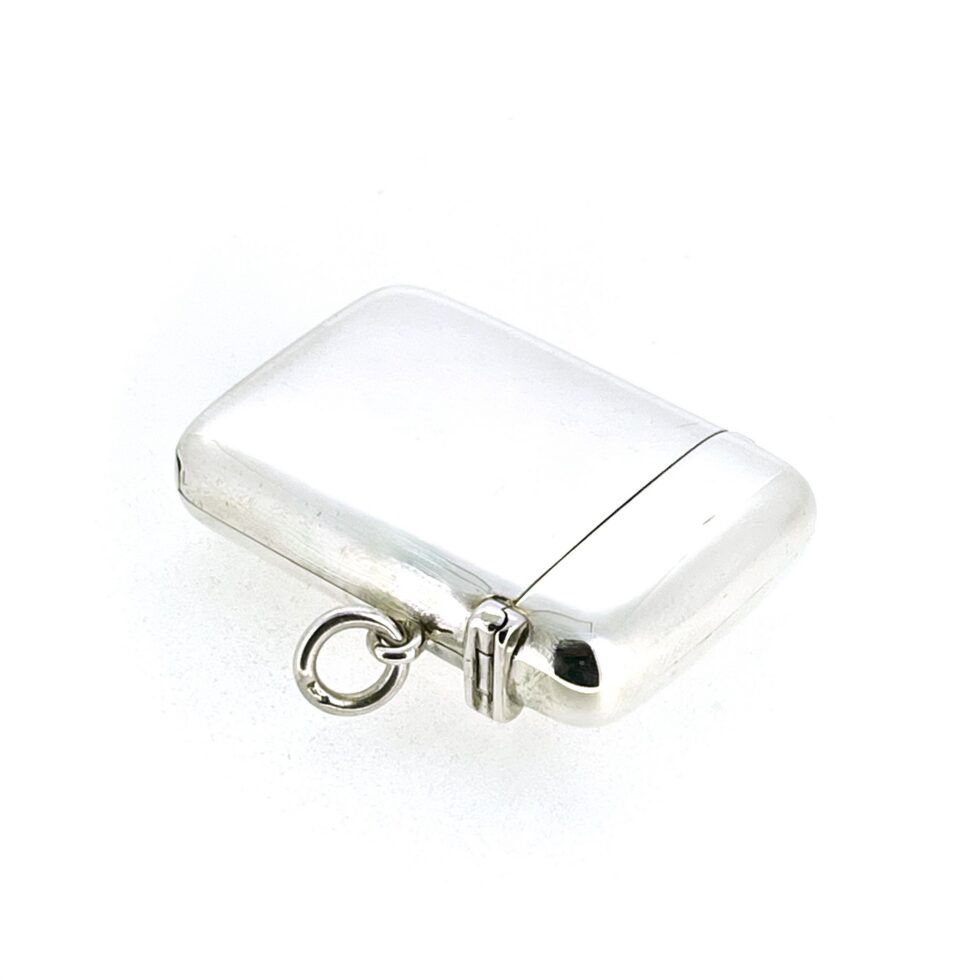
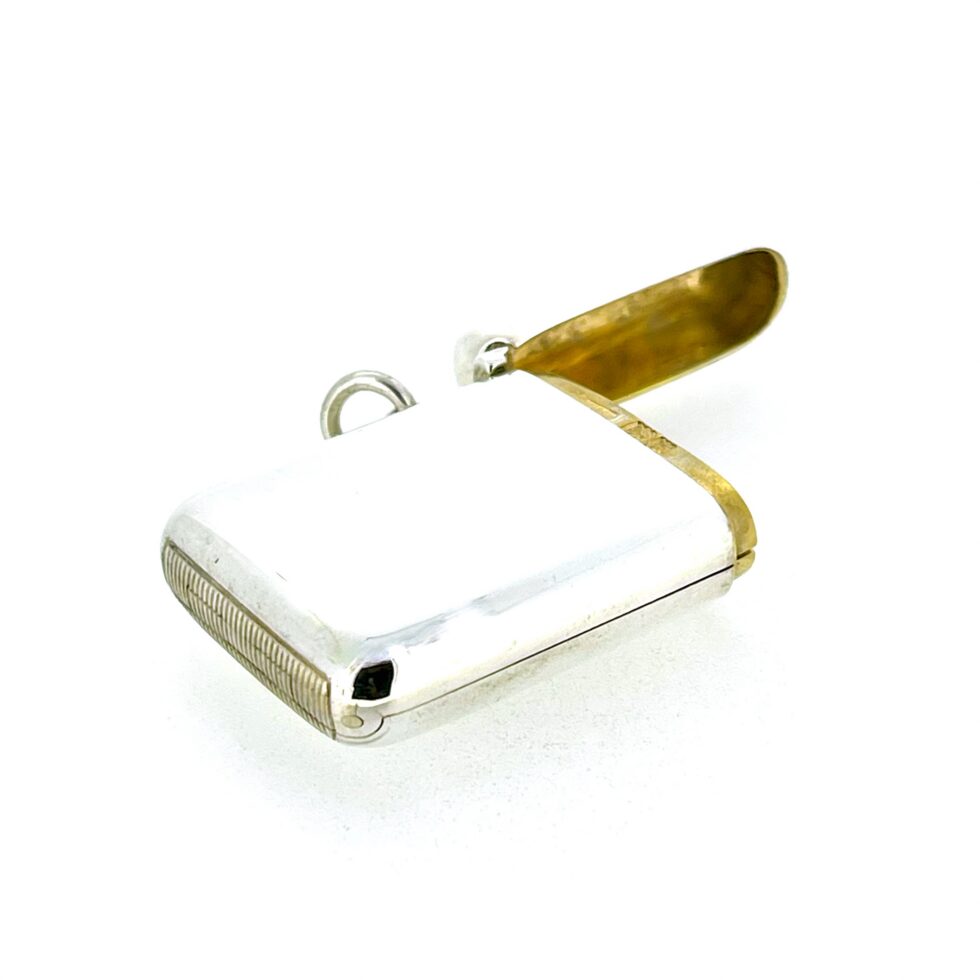
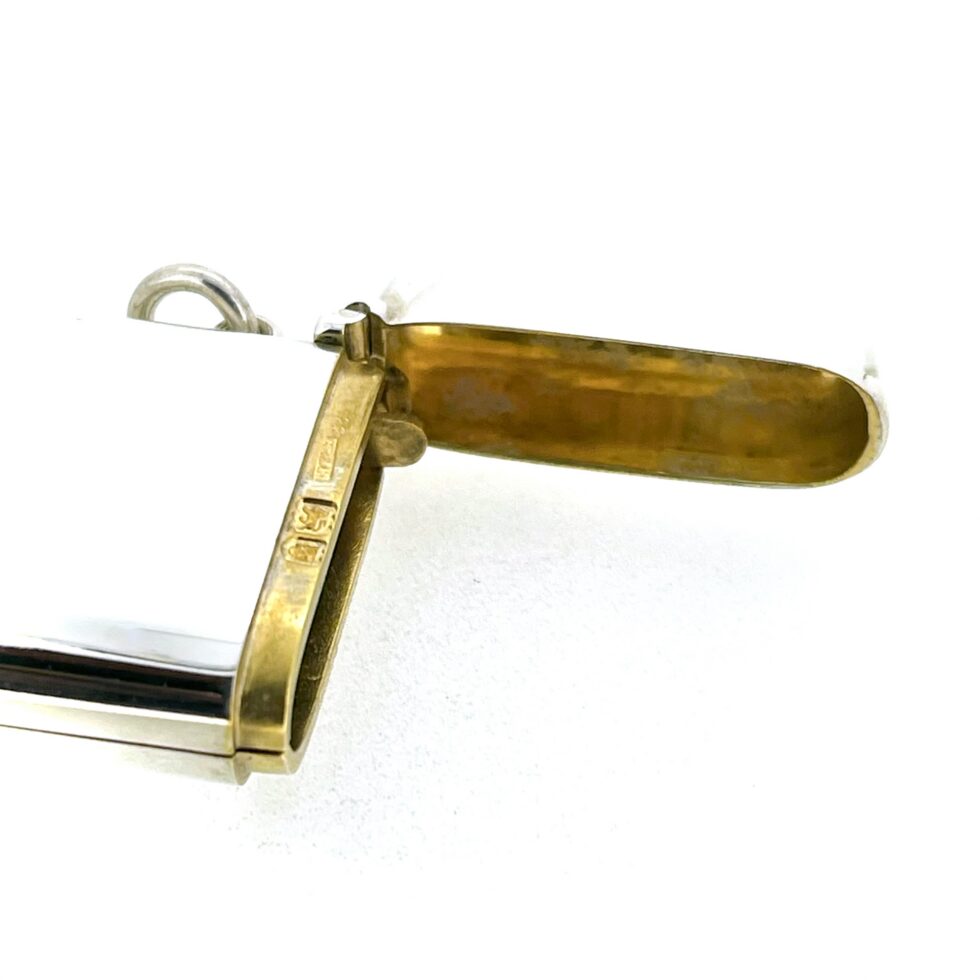
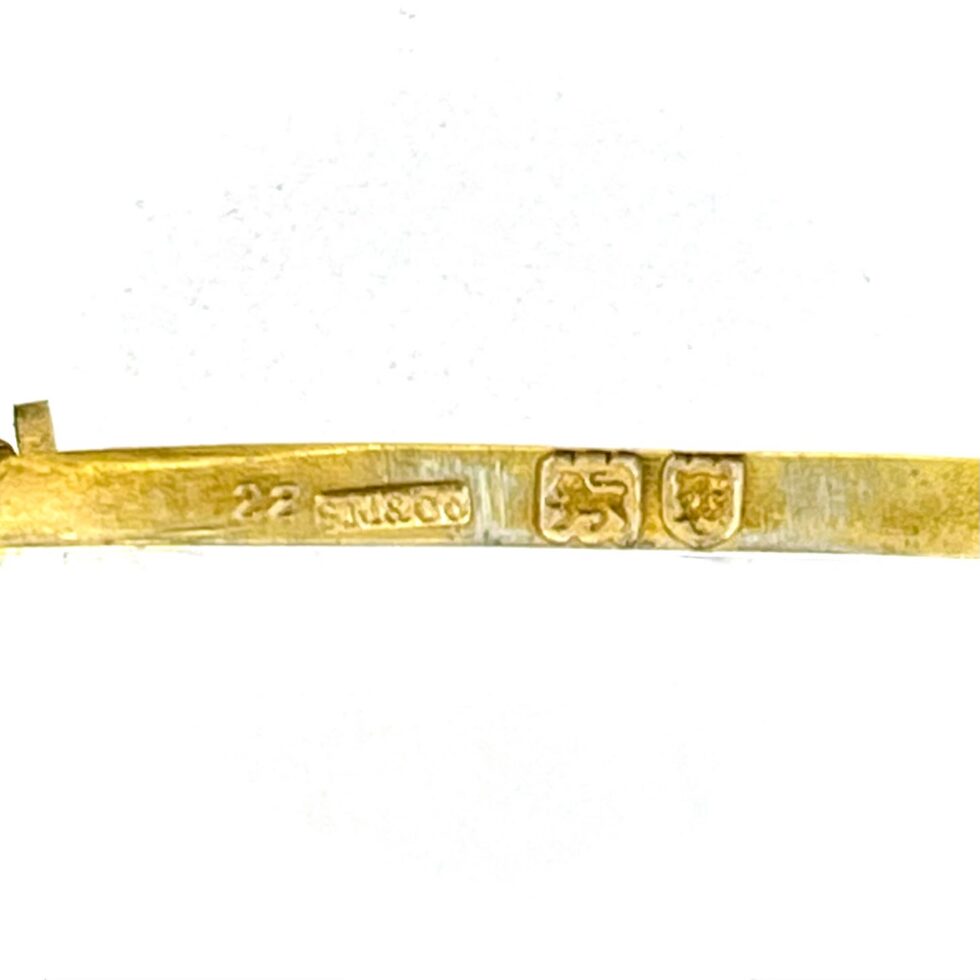
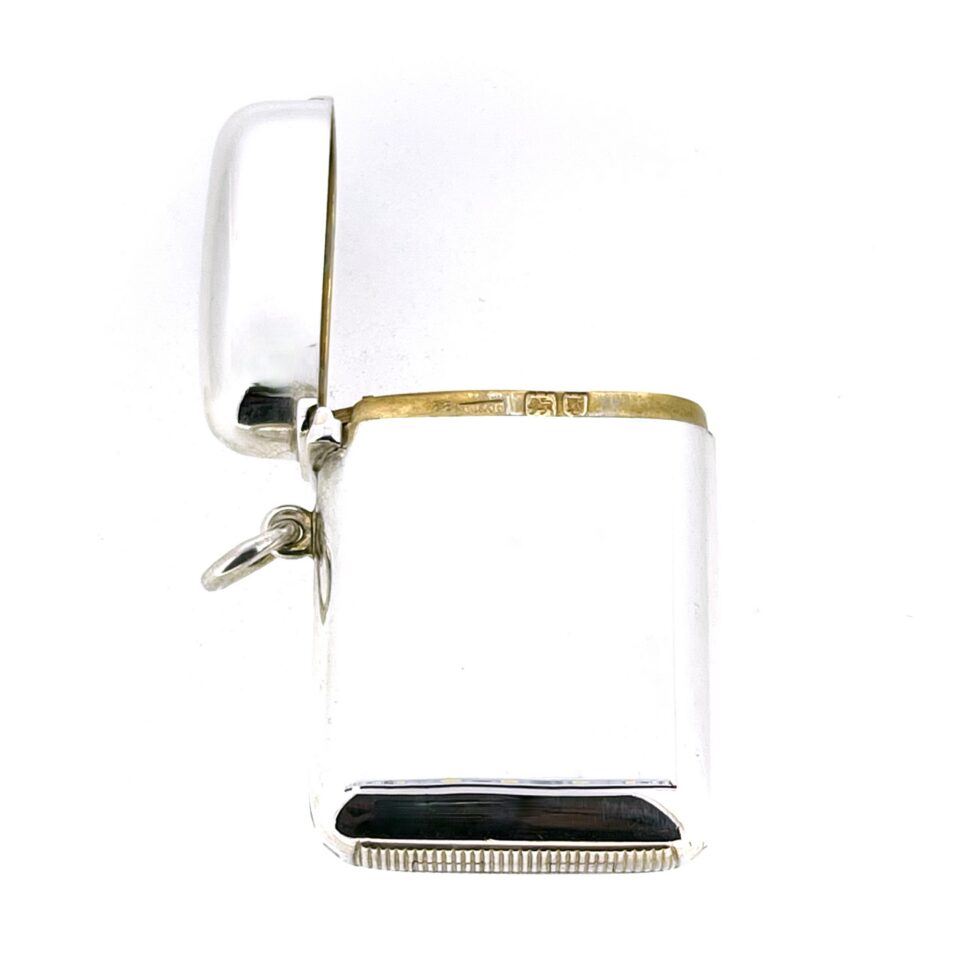
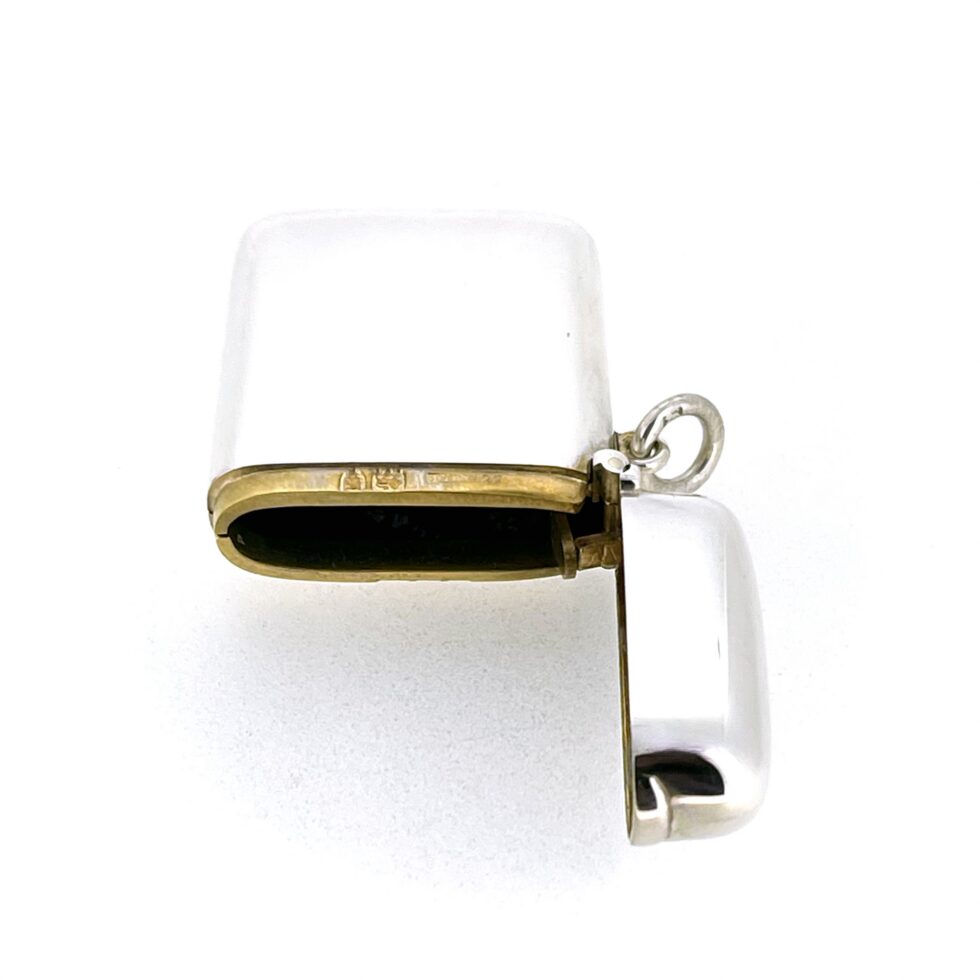
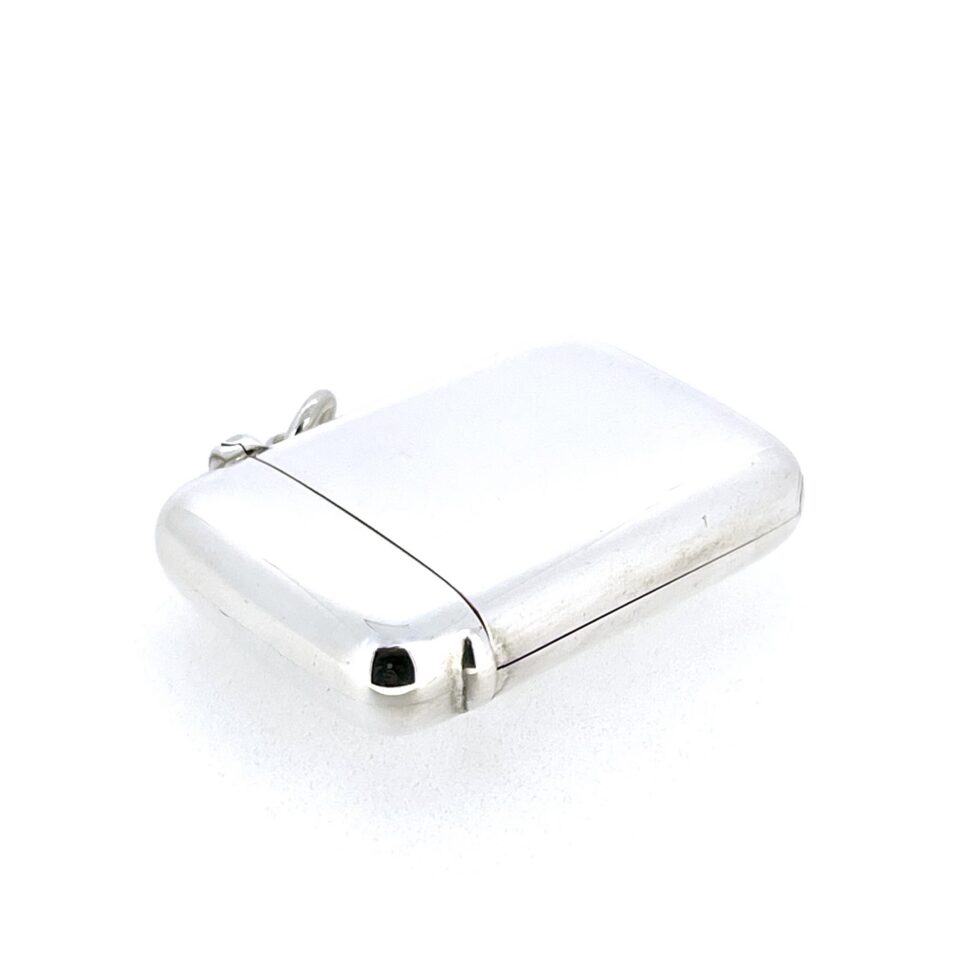
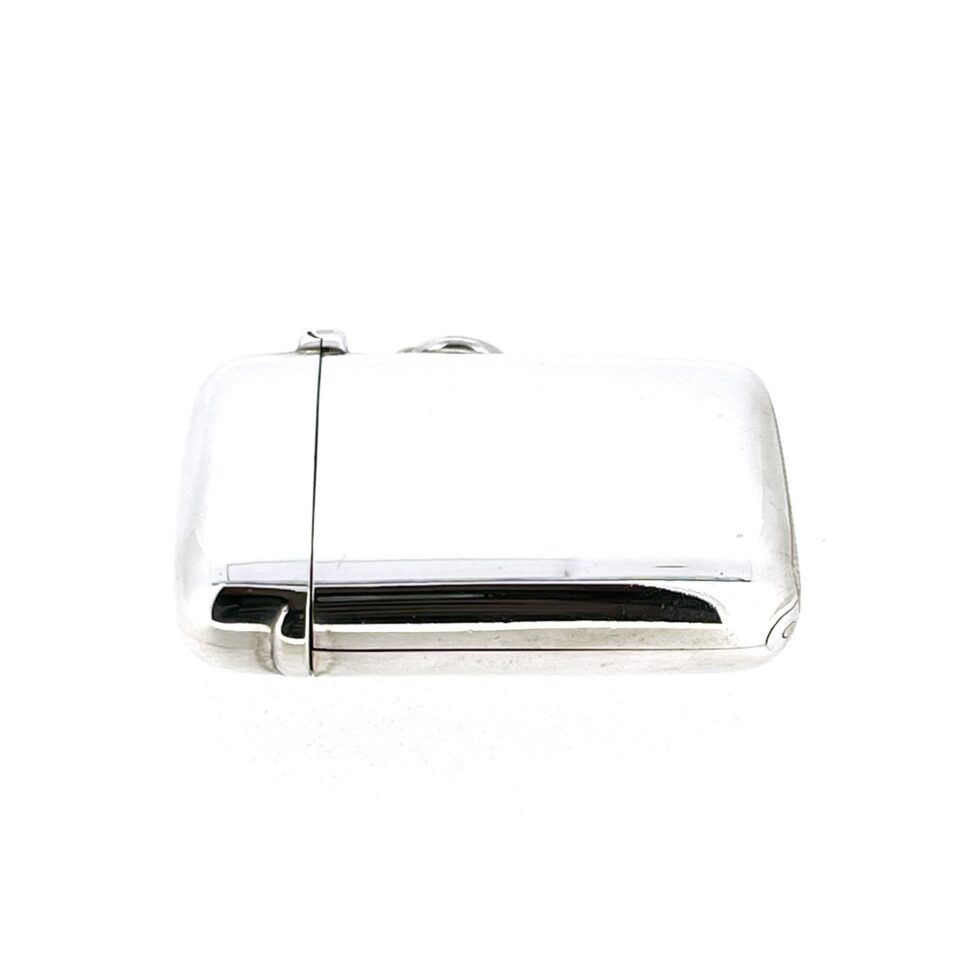
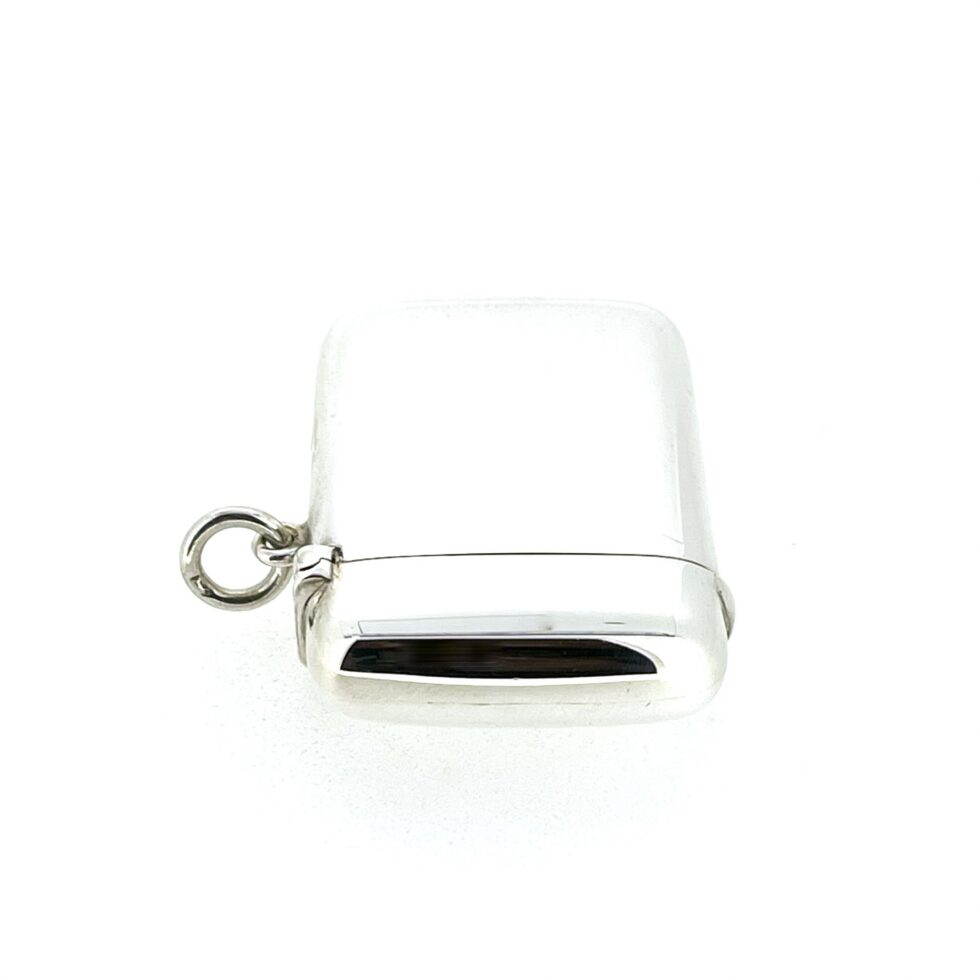
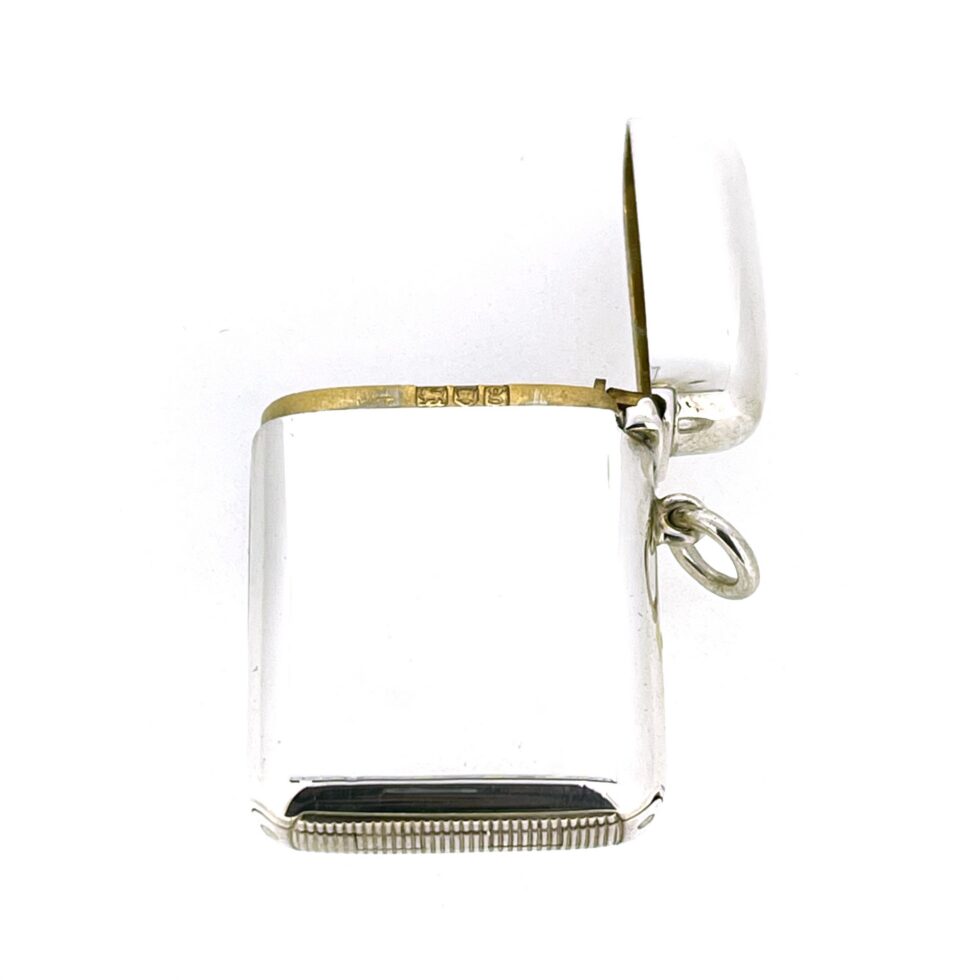
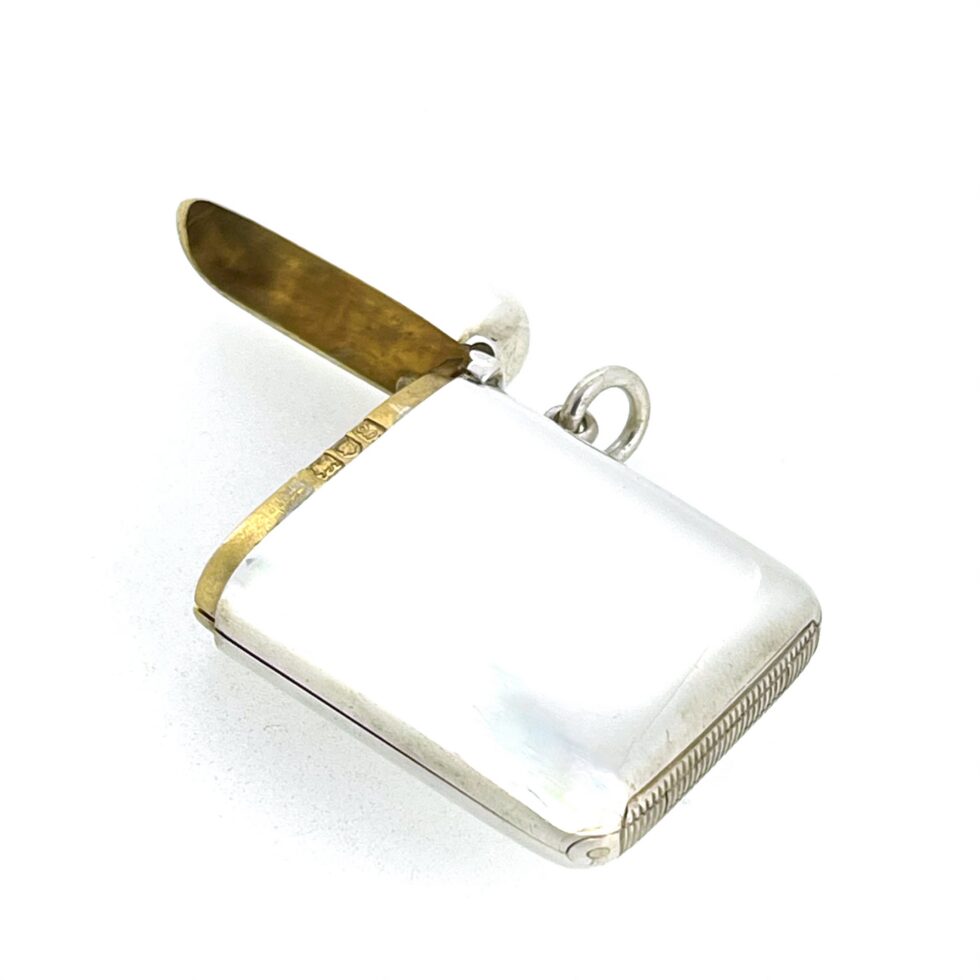
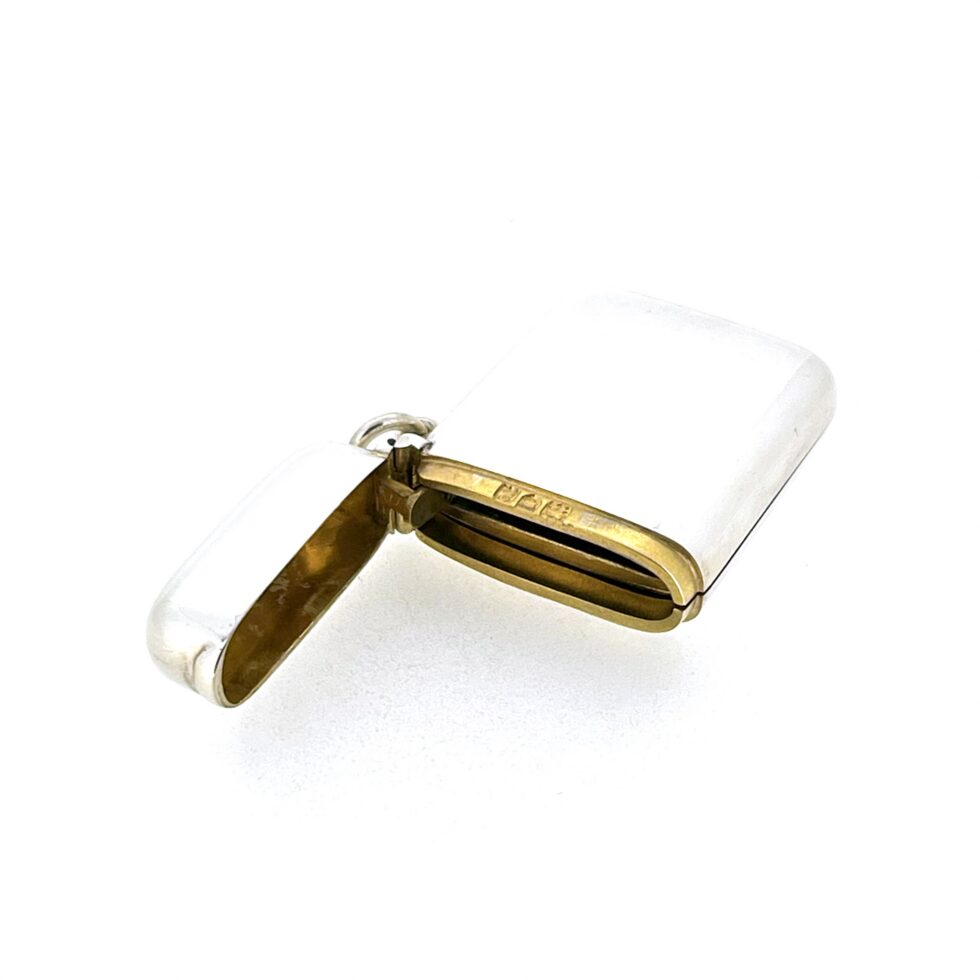
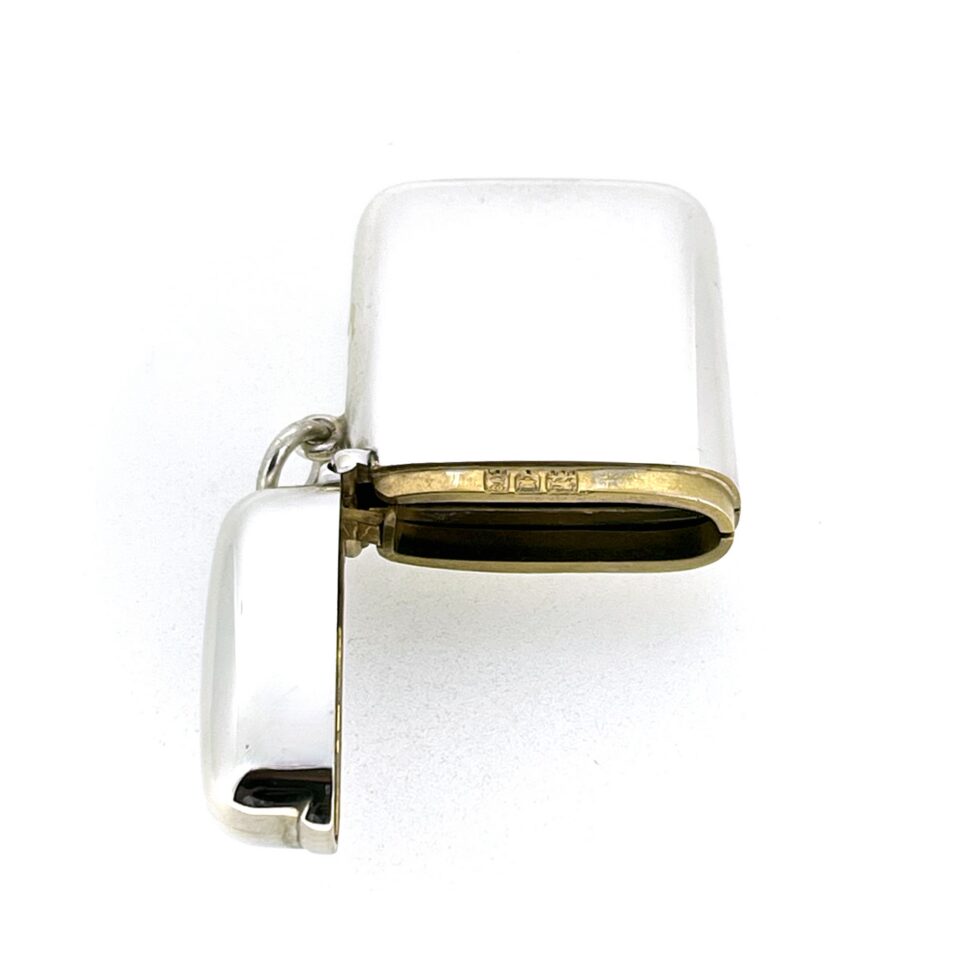
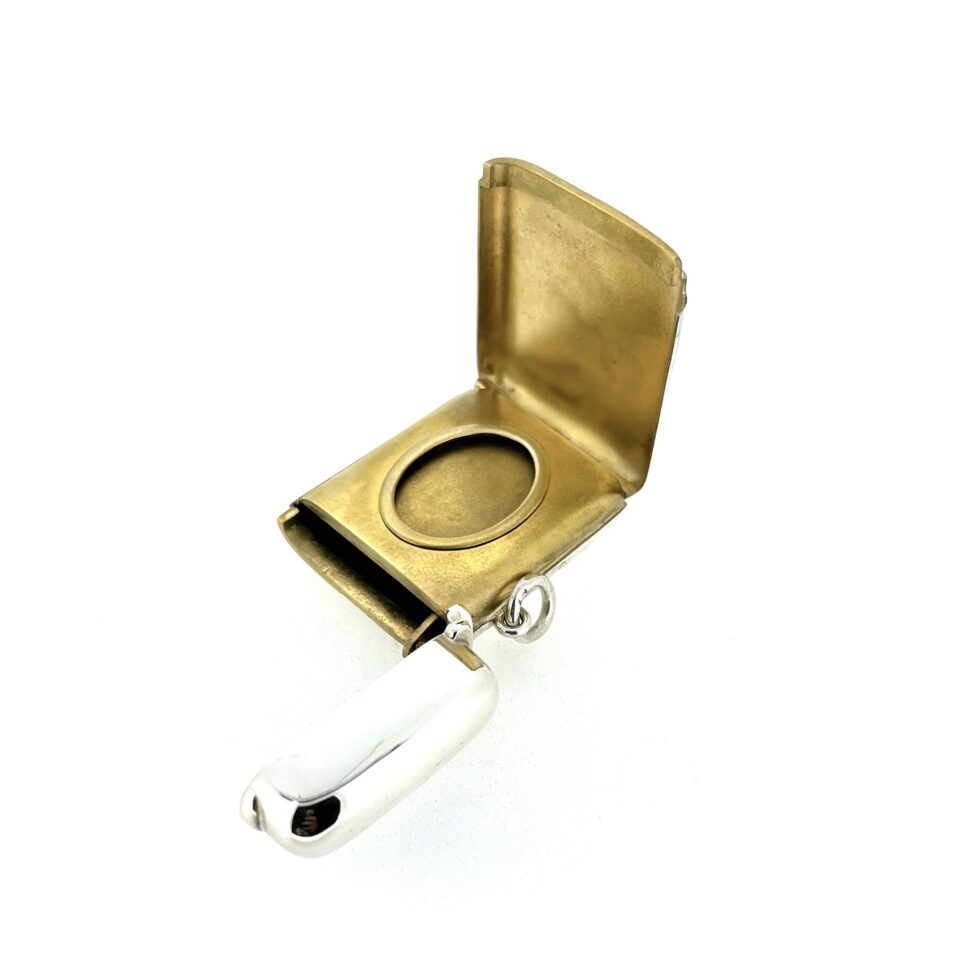
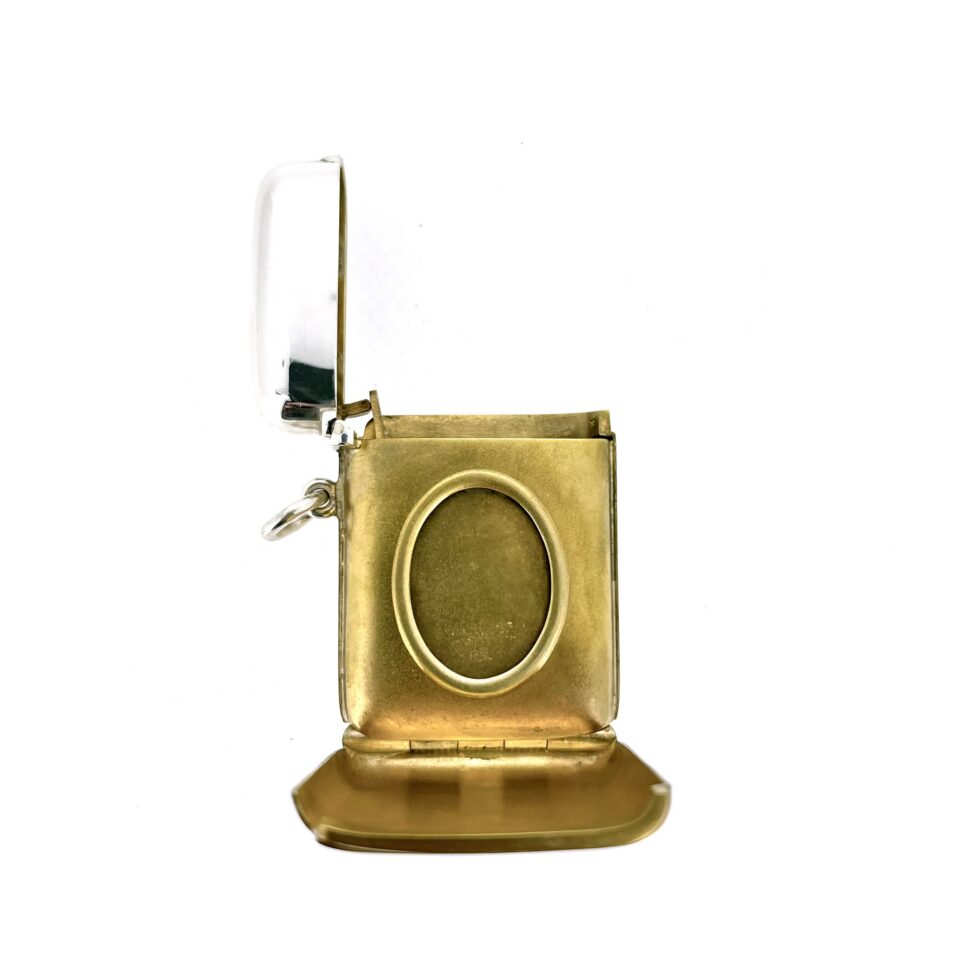
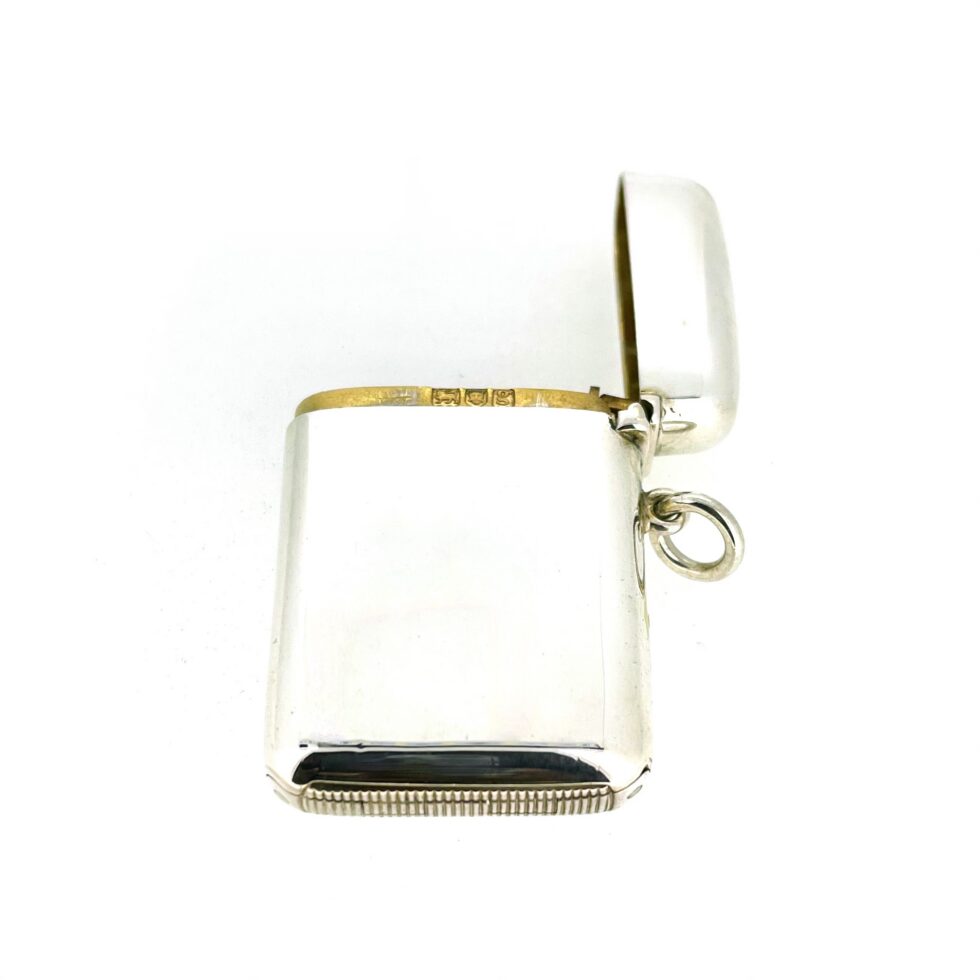
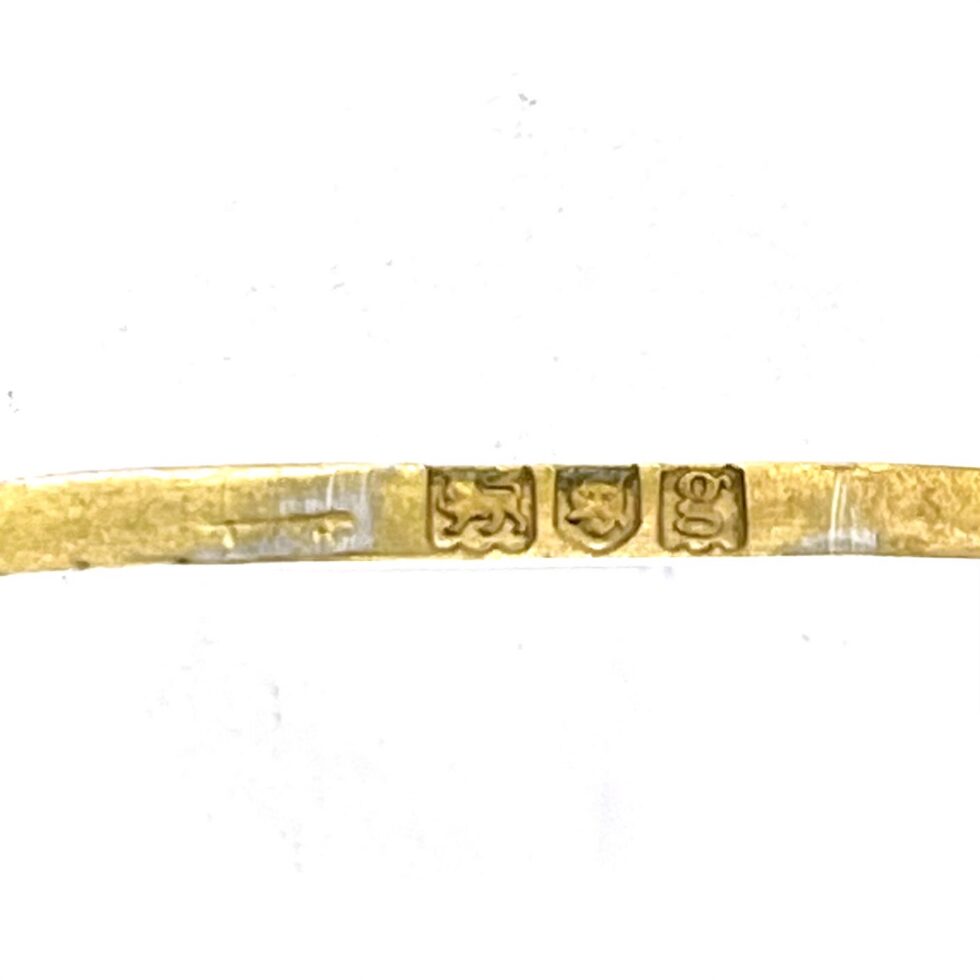
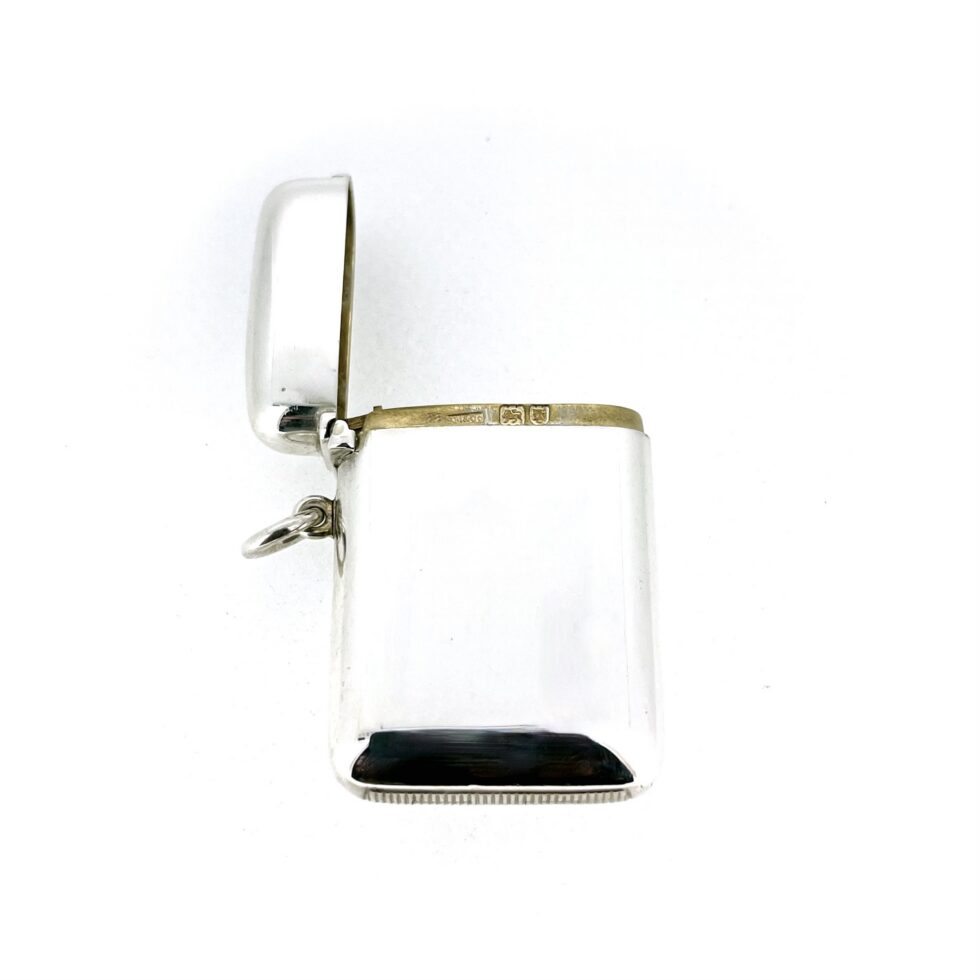
An ingenious Edwardian pocket object by S. Mordan & Co., hallmarked in London for 1902. The sterling silver vesta case carried matches within a gilt chamber, while a secondary hinged panel conceals a miniature photograph frame.
Measuring 50 × 35 × 12 mm and weighing approximately 48g, it unites practical purpose, private sentiment and precise silver engineering. Sympathetically restored and documented within the Sampson Mordan Vault.
- Object: Combined vesta case and concealed photograph frame
- Maker: S. Mordan & Co.
- Date: 1902
- Assay office: London
- Period: Edwardian
- Material: Sterling silver
- Interior: Substantially surviving original gilding with a documented thin modern 18ct gold-plated layer
- Height: 50 mm
- Width: 35 mm
- Thickness: 12 mm
- Weight: Approximately 48g
- Photograph aperture: 22 × 17 mm
- Suspension: 10 mm jump ring
- Mechanism: Sprung vesta lid with secondary hinged portrait compartment
- Photograph fitting: Removable retaining bezel
- Condition: Structurally excellent and fully functional
- Restoration: Professionally polished and sympathetically restored with selected historic wear retained
- Availability: Offered for sale through the Sampson Mordan Vault
£4,250.00
1 in stock
Estimated Delivery:
Oct 14 Oct 18
Description
Reviews (0)
Q & A
Antique Sampson Mordan Hidden Photograph Vesta Case
Made by S. Mordan & Co. and hallmarked in London for 1902, this sterling silver vesta case conceals an unusually intimate second purpose.
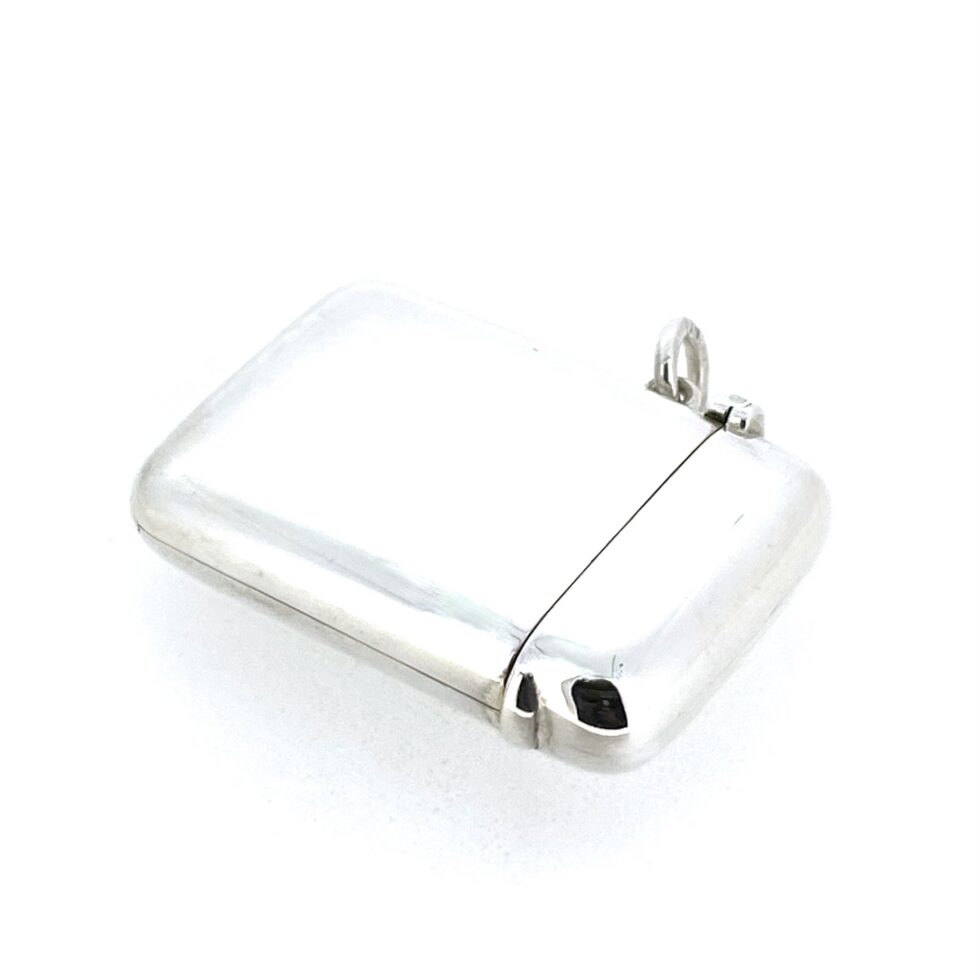
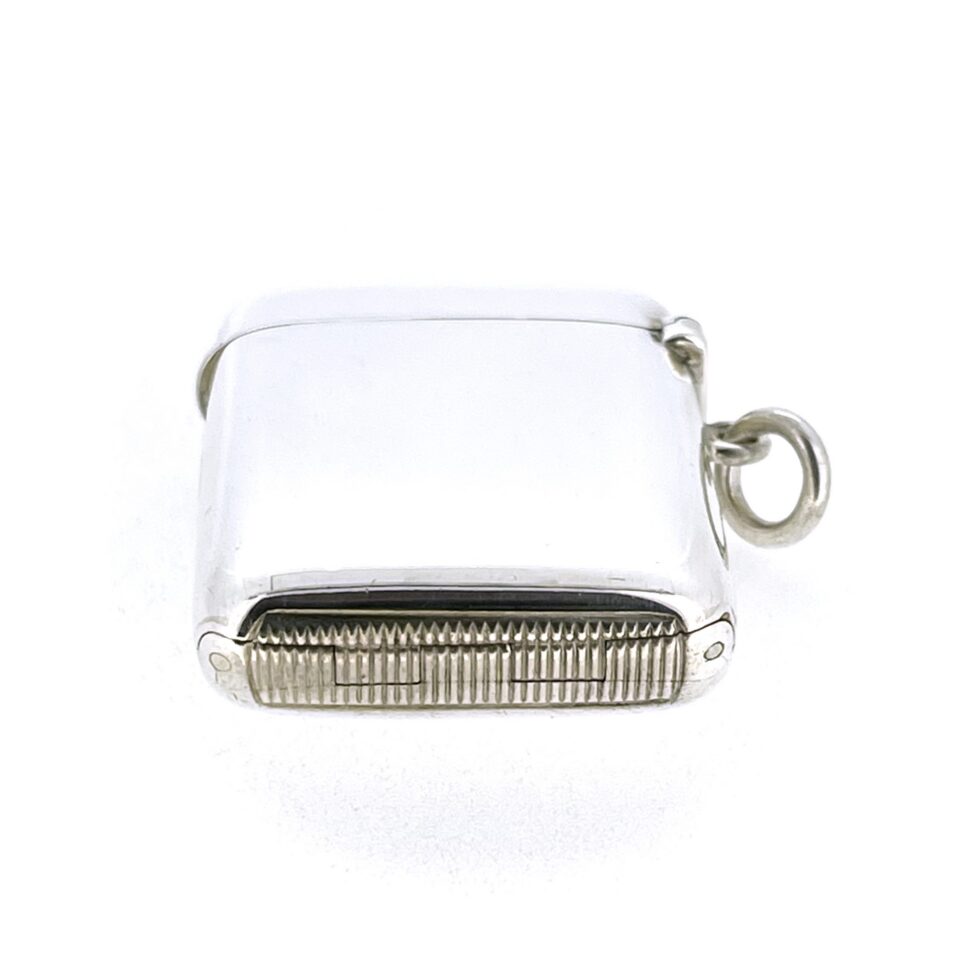
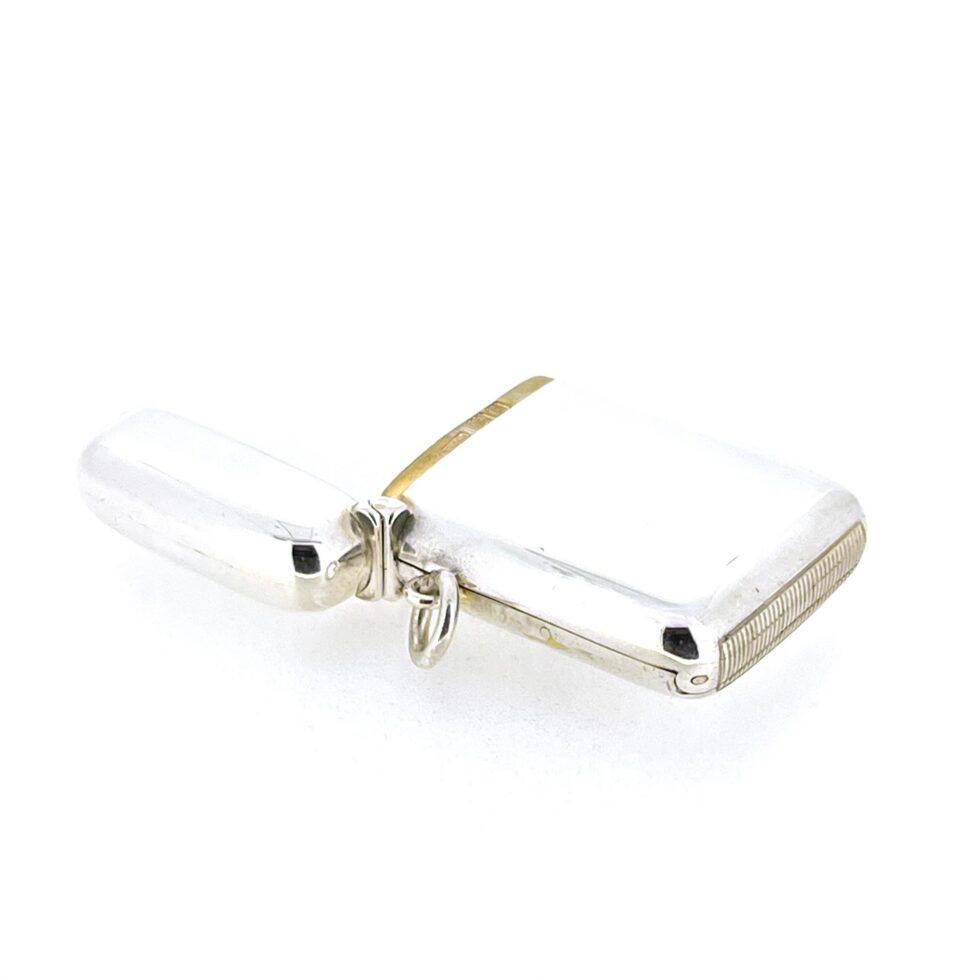
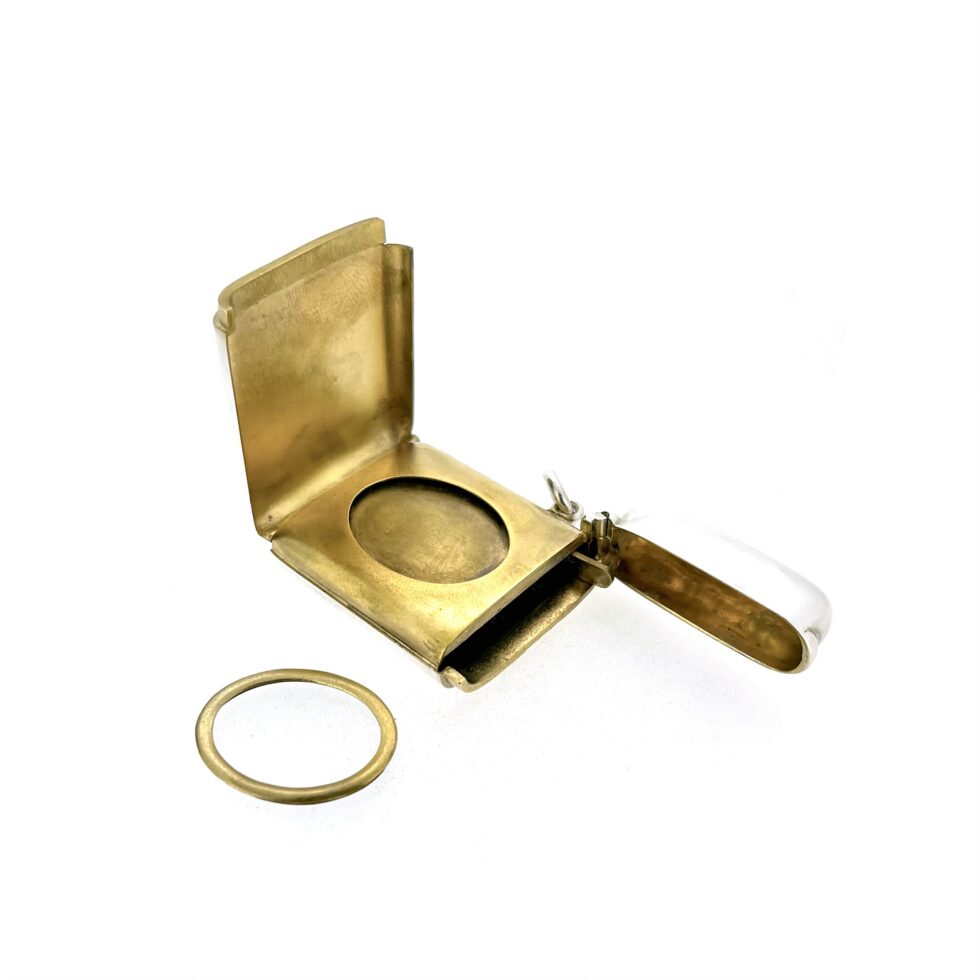
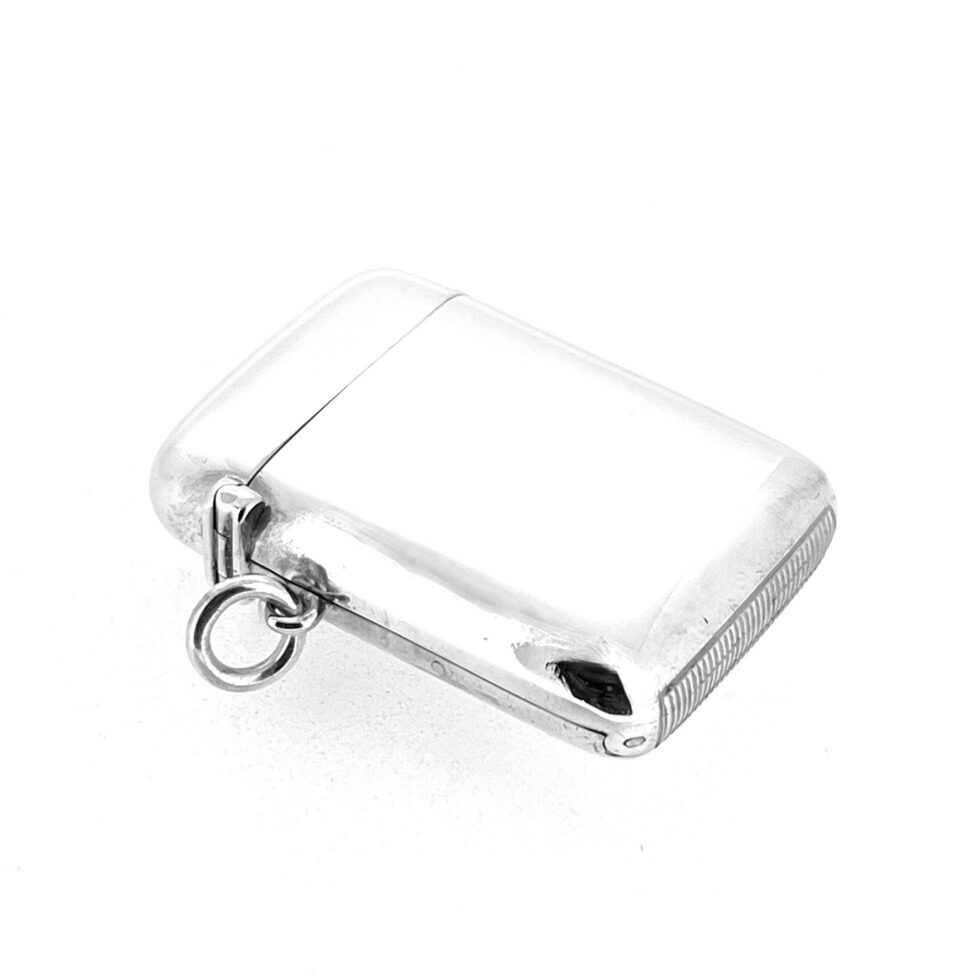
Its restrained, rounded exterior presents the appearance of an elegant Edwardian match case. The sprung lid opens onto a warm gilt chamber intended to hold loose matches, while a separate hinged panel reveals a miniature photograph aperture measuring 22 × 17 mm.
The photograph was retained behind a removable bezel, allowing a small portrait to be carried privately and protected within the silver case. Closed, the object gives no indication of the personal image concealed inside.
Utility and Private Sentiment
The design brings together three established forms of Edwardian personal possession: the vesta case, the miniature portrait locket and the gentleman’s pocket or chain accessory.
Matches could be carried and used in company, while the portrait remained hidden until deliberately revealed. The combination transformed a practical object into something personal—an outwardly sober piece of silver containing a private reminder of a family member, loved one or other significant figure.
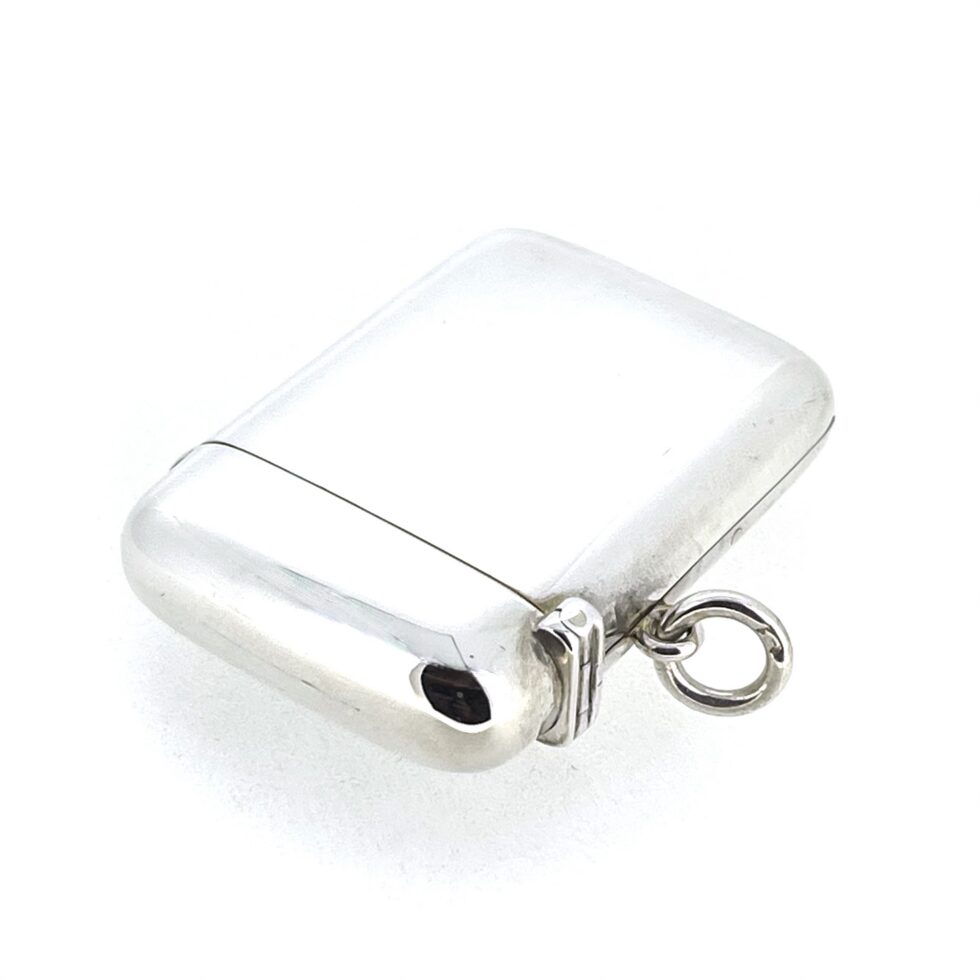
A substantial 10 mm suspension ring allowed the case to be attached to a suitable Albert chain, fob chain or pocket chain, although its precise original method of wear is not documented.
A Documented Mordan Combination Design
Research undertaken for the Sampson Mordan Vault currently identifies three individual examples of this closely related Mordan design: a silver case hallmarked in 1899, a 9ct gold example from 1900 and this silver case from 1902.
The surviving gold example retains a sepia portrait of a baby and carries a personal presentation inscription. It provides valuable evidence that the concealed compartment was used for intimate family photography rather than being merely a decorative mechanical feature.
These examples establish that the design was produced by Mordan between at least 1899 and 1902. The exact period catalogue name, original retail price and complete production period remain subjects of continuing archival research.
The Miniature Photograph
The visible photograph aperture measures 22 mm high by 17 mm wide. A small photographic print would have extended beyond this opening so that its edges could be retained securely beneath the bezel.
A carefully trimmed paper portrait is the leading interpretation for the original image format. A small tintype is also technically possible, although the aperture alone cannot establish the photographic process. The precise original form of any protective glazing has not yet been confirmed.
Silverwork and Construction
The case is formed in sterling silver with rounded edges, closely fitted panels, separate hinges, a sprung vesta lid, removable photograph bezel and suspension fitting. Producing two distinct functions within a body measuring only 50 × 35 × 12 mm required careful forming, assembly and finishing.
Historic wear at the striker and lid corners confirms that the case was carried and used rather than preserved solely as a presentation object.
Condition and Conservation-Led Restoration
The case is structurally excellent and fully functional, with an excellent hinge and strong sprung lid. It has been professionally cleaned and polished to a high finish without attempting to make it appear newly manufactured.
One face retains the slight optical memory of a very shallow historic dent. The surface has been smoothed, but sufficient silver was deliberately preserved to maintain the case’s original geometry. Major distracting scratches on the opposite face were reduced while finer evidence of age, striker wear, slight corner wear and minor handling marks were retained.
The interior preserves its substantially surviving original gilding. A thin, sympathetic layer of 18ct gold plating has been applied over that historic finish to enrich its colour without creating an excessively bright modern appearance. This modern intervention forms part of the documented restoration history and should not be mistaken for untouched original gilding.
The result is clean, elegant and suitable for presentation as a luxury object while remaining unmistakably antique.
The Sampson Mordan Vault
Acquired for the Sampson Mordan Vault in July 2026, this case is documented as an important example of Mordan’s ability to combine utility, sentiment and ingenious mechanical design within a single precious-metal object. Its Design Archive record will remain accessible after the physical piece passes into another collection.
It is recorded within the Vault as a combined sterling silver vesta case and concealed photograph frame. The familiar description “hidden photograph matchbox holder” remains useful for modern understanding, although “vesta case” is the more historically and mechanically accurate term.
What is a vesta case?
A vesta case is a portable container designed to carry loose matches. It normally incorporates a striker and a secure lid. In American collections, the same type of object is often described as a match safe.
Is this a matchbox holder?
“Hidden photograph matchbox holder” is a useful modern description, but vesta case is the more accurate functional term. A conventional matchbox holder normally surrounds a separate cardboard matchbox, whereas this object carried loose matches inside its gilt chamber.
How does the hidden photograph compartment work?
A secondary hinged panel opens independently of the vesta lid to reveal a miniature photograph aperture. The image was secured behind a removable bezel and remained completely concealed when the panel was closed.
Who made this silver vesta case?
The case bears the mark of S. Mordan & Co., the historic London manufacturer widely known as Sampson Mordan & Co.
When was it made?
It was hallmarked in London in 1902, during the early Edwardian period.
How rare is this Sampson Mordan design?
The design is uncommon. Current Sampson Mordan Vault research has identified three individual examples of the closely related form, hallmarked between 1899 and 1902. This is a minimum documented census rather than a claim that only three survive.
What kind of photograph would it have held?
A small paper portrait is the leading interpretation, although a miniature tintype is also possible. The 22 × 17 mm measurement records the visible aperture rather than the full size of the original photographic support.
Was it intended for an Albert chain?
The 10 mm suspension ring is compatible with an Albert chain, fob chain or pocket chain. Its precise original method of wear has not been documented.
Is the gilded interior original?
The original interior gilding survived substantially intact. During restoration, a thin layer of 18ct gold plating was applied over the historic finish to enrich its colour sympathetically. This modern layer is permanently disclosed as part of the object’s restoration history.
Has the case been restored?
Yes. It received conservation-led restoration, including professional exterior polishing and sympathetic treatment of the gilt interior. Fine age marks, striker wear, slight corner wear and the optical memory of a shallow historic dent were deliberately retained.
Was this design patented by Sampson Mordan?
No patent or registered-design number for this exact mechanism has yet been located. Archival research remains ongoing, so the absence of a currently identified record should not be interpreted as proof that no protection existed.
Is this object available for sale?
Yes. This example is offered for sale through the Sampson Mordan Vault. Its research and Design Archive record will remain accessible after sale.
Q & A
Ask a question
There are no questions yet


Reviews
There are no reviews yet